Biblical archaeology
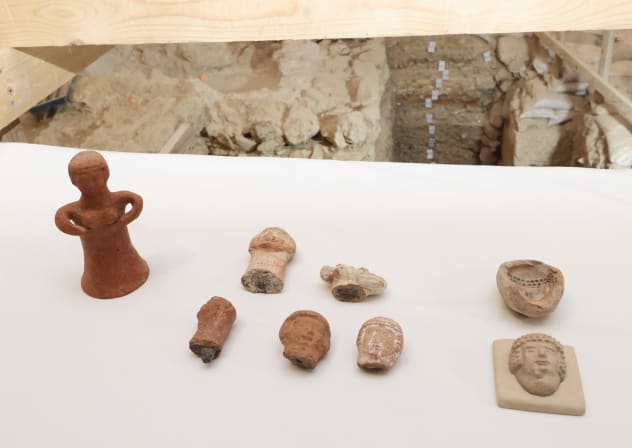
First Temple-era figurine mold unearthed in Jerusalem's 'most significant excavation' in decades
Tower of David Museum Chief Curator Eilat Lieber said that "the discovery of the first mold for producing figurines dating to the First Temple period has generated tremendous excitement."

Days before Tisha B'Av: Charred wooden beams from First Temple’s destruction unearthed in Jerusalem

Inside the tragic, decades-long mystery of Qumran's lost Second Temple incense

One of the Dead Sea Scrolls' greatest mysteries may have finally been solved by Israeli researcher
Israeli researchers map out timeline of ancient Jerusalem
Despite the reams of writings about Jerusalem, studying its Iron Age has proven challenging in terms of absolute chronology.

What did biblical prophets say about the solar eclipse
This solar eclipse, while a marvel of modern astronomy, also beckons us to ponder the universe's mysteries and our place within it, as generations before us have.

Rare coin from the Bar Kochba Revolt discovered in Judean Desert
Since 2017, a team of archaeologists from the IAA’s Prevention of Archaeological Theft unit has been systematically surveying the Judean Desert to reach valuable finds before the antiquity looters.

Plant, fruit analysis from Goliath's biblical city sheds light on Philistine rituals
In the systematic excavation project of the temple area in the lower city of Gath, a team from Bar-Ilan University has overseen the reconstruction of the plants used in Philistine rituals.

Ancient warfare meets modern tech: 7,000-year-old sling stones unveiled in Singapore
These artifacts highlight the early sophistication of combat strategies and connect the dots between the dawn of warfare and today's advanced defense mechanisms.

Israeli research uses Earth's magnetic field to verify event in Bible's Book of Kings
The discovery was achieved by scientists from Tel Aviv University (TAU), the Hebrew University of Jerusalem (HU), Bar-Ilan University (BIU) in Ramat Gan, and Ariel University in Samaria.

Grapevine: A well-deserved tribute
Movers and shakers in Israeli society.

Tomb of Joshua bin Nun renovated after pro-Hamas vandalism
The graffiti was removed by Yossi Dagan, head of the Samaria Regional Council, and IDF soldiers.

National Geographic lists Israel's Roman swords as top find of 2023
The find includes a cache of four Roman swords and the head of a deer-shaped handle, estimated to date back nearly 1,900 years, and are in excellent condition.

Radiocarbon dating proves biblical accounts of the Israeli city of Gezer
New dates provided by Austrian archaeologists allow testing of proposed correlations between texts and archaeological remains
