Israeli science
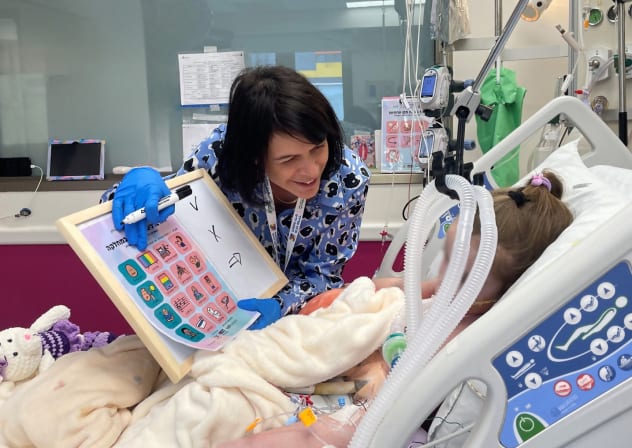
Israeli hospital launches AI system to enable hospitalized children to communicate without speaking
The system uses AI to create personalized printable communication boards in under five minutes, tailored to each child's needs as well as their age, language, gender, and background.

Using babies, Israeli study reveals why AI fails to truly understand animal calls

Amid Iran war, 53 of Israel's future scientists showcase projects in Jerusalem contest

War trauma can hinder development of children's teeth, study finds
Likud's Ofir Akunis plans international tech expo for Israel’s 75th
Akunis welcomed 23 ministers to Jerusalem in his previous term in the role five years ago for a science policy conference and to mark Israel’s 70th year.

Weizmann Institute solves the mystery of red blood cell production
Weizmann Institute's identification of the cells producing the hormone EPO could lead to new therapies for treating anemia.

Flying mammals live in an environment of constant noise, new study shows
Israeli-led study reveals that bats experience hearing loss in old age apparently have evolved some innate ability to minimize it.

Israeli judicial reform could spark damaging brain drain - survey
Young university faculty members have the highest likelihood of leaving Israel due to the Netanyahu government's judicial reforms.

Weizmann Institute scientists discover tool for the science of twistronics
The discovery might be essential for emerging technologies because it allows access to an unprecedented spectrum of new quantum interfaces.

Israel's first space telescope set to launch in 2026
ULTRASAT’s unprecedented field of view of 204 square degrees represents a 100-fold leap in the extra-galactic volume accessible to scientists for the discovery of transient sources.

Children, adults see time differently - study built on Israeli science
Heuristics are mental shortcuts or proxies that enable people to make quick decisions and were introduced by Israeli-American psychologists.

Israeli scientist Prof. Zvia Agur to become AAAS fellow
This honor, becoming a fellow of the world's largest general scientific society, is a reflection of Agur's years of achievements in the medical field.

Does the human brain know when something sounds wrong?
Our brains are capable of distinguishing noises that are natural, compared to those that are perhaps a bit off-key.

New antibiotic "cocktail" can help combat superbug
In the current study, a combination of different antibiotic drugs that prevent the formation of resistance was examined.
