Parsha
Beyond the Headlines: Have you heard Elkana Levi’s speech? - opinion
Elkana did not gloss over the pain or the difficulty. He spoke about friends who had been killed, and about his darkest moments.

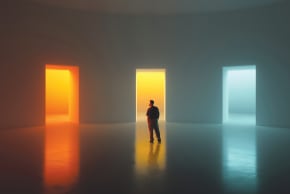
Parashat Re'eh: The choice to choose

On Shabbat Nachamu, Isaiah reminds us that human power is just an illusion

Parashat Hukat: A life of meaning
Parashat Nitzavim: Who cleanses you?
Centuries of sin, exile and distance created a sort of spiritual cover over the heart that thickened as time passed.

Don't forget to say thank you
Too often we perceive our great achievements as a testament to our greatness and fall prey to “And you may say in your heart, ‘My strength and the might of my hand made this victory’.”

What do mamzerim have to face in Israel?
The mamzer status not only prevents people from marrying in Israel, but puts children at serious risk of abuse. Meet the organization working to change this.

Parashat Ki Tetze: Making ourselves disappear
Deuteronomy 22 tells us that when you see another’s oxen or sheep lost, you should not remain indifferent.

Parashat Ki Tetze: What is a Holy War?
We see three laws in these verses that are hard to imagine are mentioned in reference to a war camp.

Parashat Ki Tetzei: Domestic workers must be cared for by employers
The minimum wage, in its current state, is a collective violation of the biblical prohibition of “oshek” (worker oppression).

Parashat Ekev: Your gift or God’s?
The Land of Israel, like all the goods of this world, is God’s gift, but the people must still fight to deserve it.
Torah commands both love and vengeance. What’s a Zionist to do? - opinion
When I read this week’s Torah portion, Ekev, I hear echoes of the Zionist narrative of my upbringing.

Parashat Matot-Masei: The art of listening
The two-and-a-half tribes who ask for their land to be outside the stated borders of the land of Israel serve as a subtle but beautiful example of what it is to ask, and what it means to listen.

Parashat Pinhas: A plurality of opinions
We learn from this week's Torah portion, parashat Pinhas, a plurality of opinions is a godly phenomenon.
