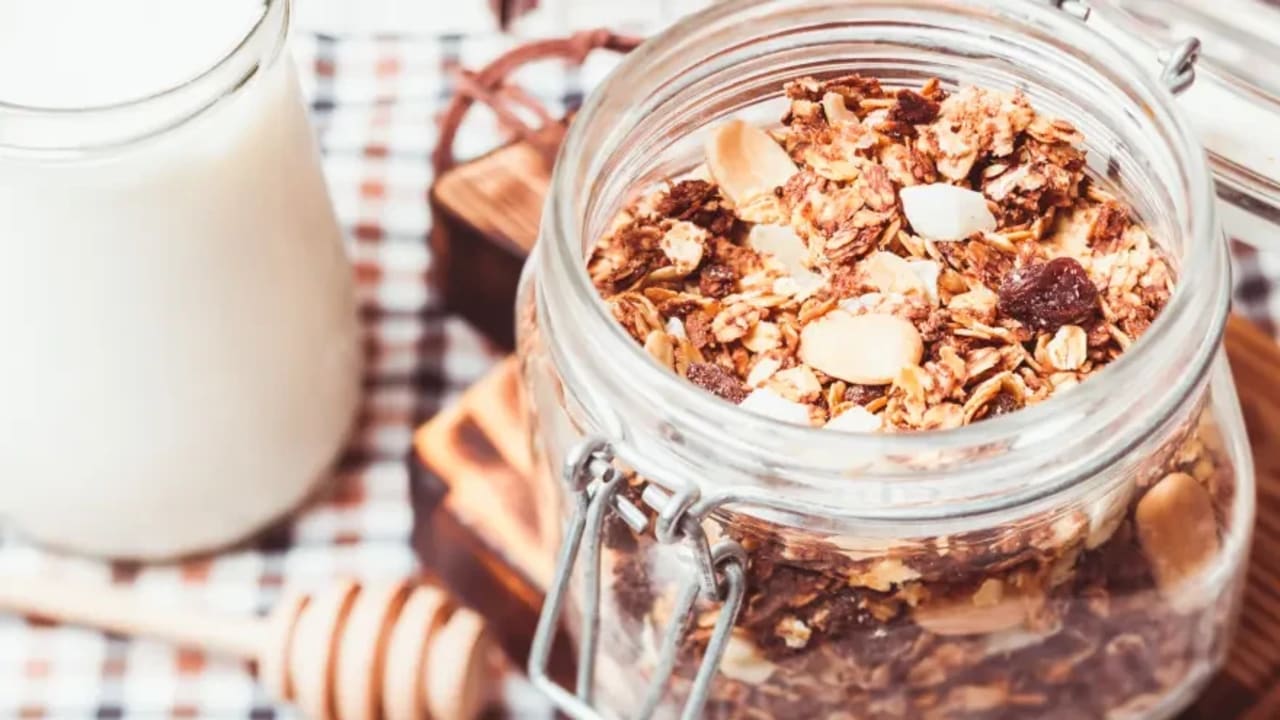
On especially busy or stressful days like these, many of us look for something small and sweet to calm down. Granola is perceived as the perfect choice: A colorful, crunchy bowl, with yogurt or milk, nuts, almonds and dried fruit. It feels healthy and natural, but is there really a difference between granola prepared at home and the one bought at the supermarket? And is it possible “without limitation”?
So first of all, to answer the listener’s question, we will start with the bottom line: There is no essential difference between homemade granola and high-quality store-bought granola. The real difference lies in the quantity, the composition and what is added along the way.
A lot of health – and also a lot of calories: Granola usually consists of oats, nuts, almonds, seeds and sometimes dried fruit. All of these ingredients are indeed nutritious, but also very calorie-dense. A level tablespoon of granola weighs on average about 10 grams and contains about 40 calories. Two small tablespoons reach about 80 calories, and in practice most people pour much more than two tablespoons.
When adding yogurt, fruit and sometimes also honey or silan, an innocent bowl can easily reach 400-500 calories. There is no problem with this when it is planned as part of a balanced meal, but the problem begins when granola is perceived as a “healthy snack” that is not counted.
Oats – the grain that makes the difference: The base of granola is oats, and indeed this is one of the highest-quality grains nutritionally. In a serving of 30 grams of dry oats there are about 107 calories, about 3.7 grams of protein, about 3 grams of dietary fiber, mainly beta-glucan, about 38 mg of magnesium, about 1 mg of iron, about 115 mg of potassium and a nice amount of zinc and B vitamins, especially B1. In addition, oats contain unique antioxidant compounds called avenanthramides, which have been studied in the context of blood vessel health and reducing inflammation.
Cholesterol and heart health: The soluble fibers in oats, especially beta-glucan, create a kind of gel in the intestine that slows the absorption of fats and sugars. A meta-analysis published in "The American Journal of Clinical Nutrition" showed that daily consumption of beta-glucan from oats contributes to a significant reduction in LDL cholesterol. The FDA also recognizes the connection between beta-glucan and heart health, and allows a health claim for products containing a sufficient amount of it.
Blood sugar balance and diabetes risk: Thanks to those same soluble fibers, oats contribute to a more moderate rise in blood sugar levels after a meal. A large cohort study published in "Nutrients" claims that frequent consumption of oats contributes to a reduced risk of developing type 2 diabetes, especially when it involves replacing processed grains.
Inflammation, blood pressure and metabolic health: A clinical study published in "Journal of Nutrition" concluded that oat consumption led to an improvement in lipid profile and a decrease in certain inflammatory markers. This happens because of the combination of soluble fiber, antioxidants and the magnesium content in oats.
Granola and stress – is there a connection? Beyond the physiological aspect, granola also has a certain emotional dimension: The crunchy texture and natural sweetness provide a sense of indulgence without “feeling guilty.” Apparently, there is also a certain biochemical basis for this: Oats contain tryptophan, an amino acid that the body uses to produce serotonin and melatonin, which are linked to relaxation and sleep.
In addition, the magnesium content in oats and nuts contributes to the functioning of the nervous system and to reducing the stress response. So it is important to stay in proportion: Granola is not a medicine against stress, and it will not balance the nervous system if the quantity is too large and causes a caloric overload.
Homemade granola – is it really better? So we return to the listener’s question: The common claim is that homemade granola is always preferable. But note: In practice, it depends on how it is prepared. Many recipes include generous amounts of coconut oil, silan or honey. The result may be high in calories and fat no less than a store-bought version.
On the other hand, aside from the type of oil used in store-bought versions, these granolas do not contain preservatives or harmful additives. There are very high-quality granolas on the market that contain only natural ingredients: Oats, nuts, seeds, and mild seasoning. Without food coloring, without flavorings and without unnecessary added sugar.
Therefore in the end, when comparing balanced homemade granola to high-quality store-bought granola, there is no significant nutritional difference. Both will provide a similar amount of calories, fiber, fat and protein. The difference lies in the specific choice and in the quantity consumed.
Where should you pay attention? The truly important parameters are: The amount of oil, roasting in the oven with a lot of oil greatly increases the caloric value, portion size – since it is very easy to exceed the desired amount without noticing. Whether preparing at home or buying, the recommendation is to measure the portion at least at the beginning, in order to understand what is a reasonable amount for you.