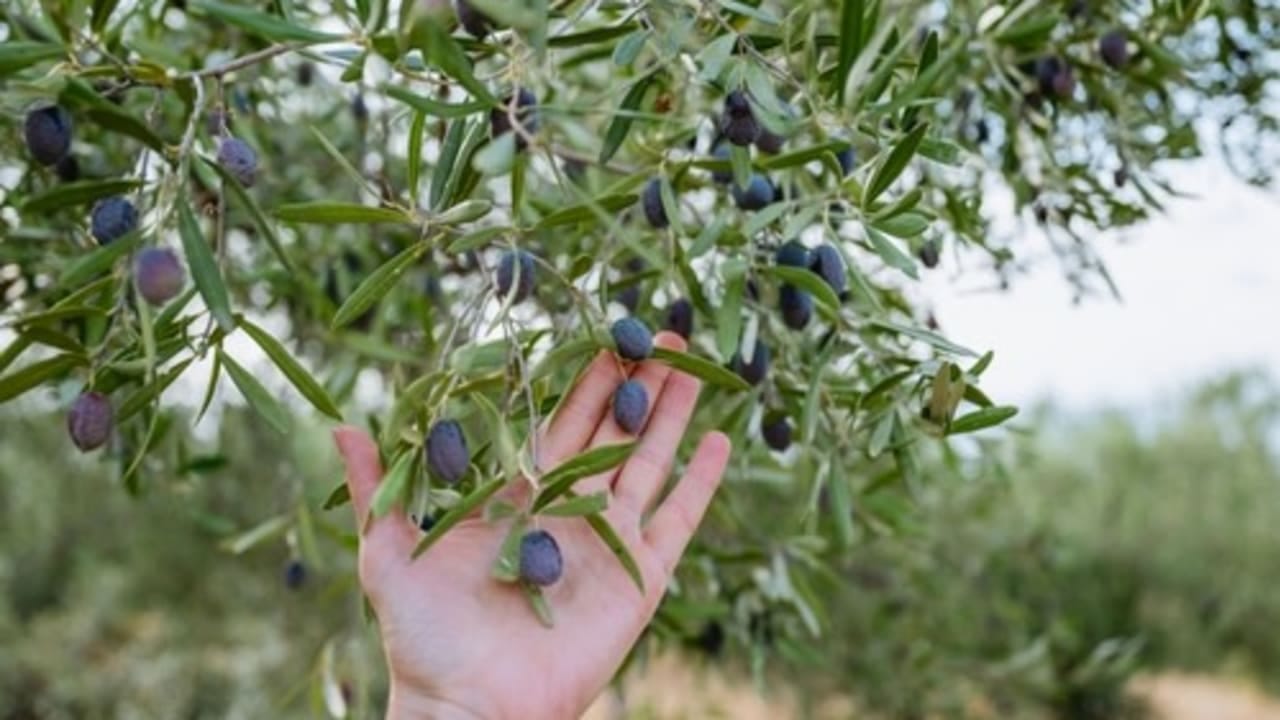
A tarpaulin spread out beneath a tree, children shaking branches, someone using a stone to crack each olive and transfer it into a container with water and salt. We are at the peak of the olive harvest season, and in backyards and villages, people are now filling the pantry for an entire year. Every family has its own recipe: Some change the water every day for weeks, and some swear that only bay leaves make the difference. In a few weeks, the distribution season will begin: A jar for the neighbors, for friends, for children who live far away, and a jar that always stays behind, in Grandma's refrigerator.
The olive is one of the Seven Species, and it turns out it is also one of the first cultivated here. Dr. Dafna Langgut of Tel Aviv University and Prof. Yosef Garfinkel of the Hebrew University of Jerusalem found charcoal from olive trees about 7,000 years old at Tel Tsaf, south of Beit She'an. The site is located outside the area where wild olives grow, and therefore the researchers interpret the wood remains as strong evidence of olive cultivation at the site.
In the 14 years this column has been published, much has been written in various contexts about olive oil and its high nutritional quality. This time, I am leaving the bottle aside and focusing on the olive itself: The one we snack on from a small dish before a meal, scatter on pizza, and buy at the supermarket.
Salt of the earth
An olive picked straight from the tree is bitter and inedible. The main culprit is a compound called oleuropein. During soaking and curing, some of the bitter compounds pass into the water and some break down, and the olive becomes tasty, even very tasty. Salt helps preserve it, but it does not disappear. Some remains in the liquid, and some penetrates the olive. Therefore, even drained and rinsed olives remain a significant source of sodium.
According to information published on packages of green olives in supermarkets, 100 grams contain 990 to 1,300 mg of sodium. Ten medium pitted olives weigh about 40 grams, providing 400 to 520 mg of sodium. This is one-fifth to one-quarter of the daily limit the World Health Organization recommends for adults, 2,000 mg per day.
The average Israeli consumes twice the recommended amount of salt, according to Health Ministry estimates. About three-quarters of it comes from ultra-processed food products, rather than from the salt shaker or home cooking. Simply cured olives are a processed food, containing fruit, water, and salt, but are not considered an ultra-processed food.
Unlike olive oil, the health effects of eating olives have barely been studied in humans. A team of researchers from the University of Porto in Portugal compiled what is known about table olives in 2020 and published their findings in the Journal of Nutritional Science.
In most varieties, 67% to 82% of the fat is monounsaturated fat, primarily oleic acid. Olives contain vitamin E, dietary fiber, and plant compounds called polyphenols, which are antioxidants that protect cells. A review published in 2020 in the journal Foods describes a study in which olives fermented using controlled bacterial cultures contained up to eight times more hydroxytyrosol and tyrosol, two of the most potent polyphenols, compared to oil extracted from the same olives.
When building a menu, olives belong to the fats group. They can be added to a salad, but they do not replace vegetables. A brief rinse with water before serving removes some of the salt on the skin. And at the supermarket, it is worth comparing labels: Between packages that look almost identical, there can be a difference of about 30% in sodium.
Not ripened on the tree
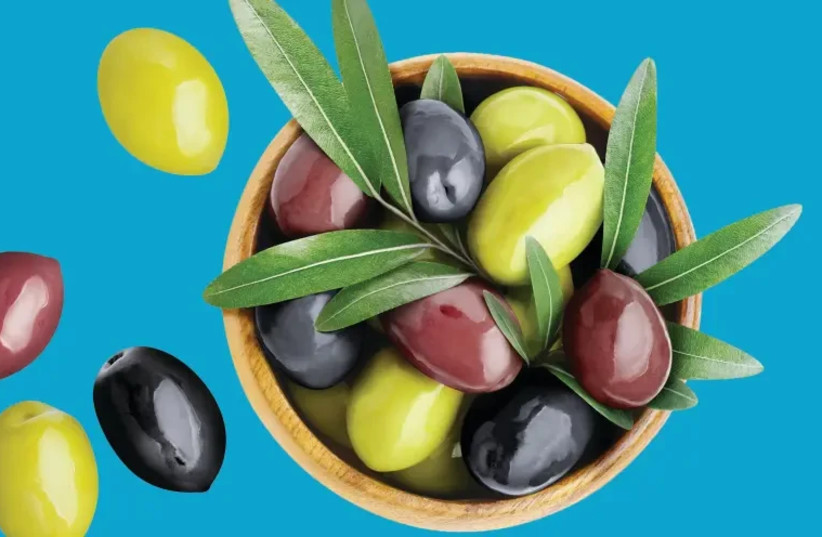
"Natural black olives that are picked ripe have a shade ranging from purple to brownish-black," describes Liat Hessel, a food engineer, lawyer, and regulatory expert. However, some of the black olives in cans and in slices for pizza did not ripen that way on the tree. "Black olives are, in fact, green olives that have undergone intentional oxidation in an industrial process, and were thus darkened," Hessel explains. "In Israel, the label 'darkened olives' appears on the packaging. To stabilize the color, an iron compound is added to them. The darkening additives permitted in Israel are ferrous gluconate (E579) and ferrous lactate (E585). All olives, regardless of their color or whether they are packaged in cans, jars, or bulk, contain no preservatives, because the salt content protects against bacterial growth."
When certain foods are heated, a substance called acrylamide is formed, best known from french fries, potato chips, and toasted bread. It is advisable to reduce cumulative exposure to it. In a study published in 2023 in the Journal of Agricultural and Food Chemistry, researchers from the University of Hohenheim in Germany examined acrylamide levels in olives.
Before heating, darkened olives were found to have much higher levels than green and natural black olives. After heating, different results were obtained: In green and natural black olives, levels rose, and in some samples even reached higher values than those measured in darkened ones. In the darkened olives themselves, no change was found following heating. Olives are not a major source of acrylamide in the diet, but the way they are prepared also affects exposure. For the small dish on the table, one can prefer green or natural black olives. When making pizza or quiche, adding the olives after baking can reduce the formation of acrylamide in them.
If you have an olive tree in your yard, now is the time to cure olives. It is important to stick to curing and storage instructions from a reliable source, and not to change the amounts of salt, vinegar, or water. Salt and acidity, as mentioned, are what prevent olives from spoiling and protect against bacteria and molds. In addition, this protection depends on hygiene and storage conditions, and not every recipe is suitable for long-term storage or keeping outside the refrigerator. Salt intake can be reduced in the diet: Through the amount of olives eaten and what is served alongside them.