
Against the backdrop of eternity, how can our tradition keep up with the rapidly changing landscape of modernity?
The emergence of denominational Judaism can be framed as the Jewish people’s response to this question. As a Jew who has walked across the spectrum, deeply appreciating the diverse tapestry of Jewish life spanning time, space, and denominations, eilu v’eilu divrei Elokim chayim – these and these are words of the living God.
Judaism offers a framework, language, and tools to accompany us as we advance the mission of creation through the ebbs and flows of time. For a people rooted in eternity, our modern expressions of Judaism are painfully tethered and bound to frameworks, institutions, and structures that no longer adequately serve the needs or the people who forged their formation in the first place.
Just as several events happened throughout Jewish history – the Bible introduced the mechanism of sacrifices to pacify the idolatrous needs of our ancestors who left Egypt; the rabbis of the second century implemented prayer after the destruction of the temple; denominations emerged to gather like-minded exploration of balancing between tradition and modernity; and Zionism established the Jewish state – so is there a dire need to direct our resources and energies to forging a model of Jewish life and engagement and rabbinic leadership that can pass this narrative on to another generation continuing this marvelous intergenerational storytelling.
Judaism has evolved into something far more eclectic, textured, nuanced, and layered than any one singular element upon which we continue to narrowly build. It is neither exclusively religious nor cultural, textual nor experiential, rooted in antiquity nor looking towards modernity, practice nor theory, spiritual nor academic.
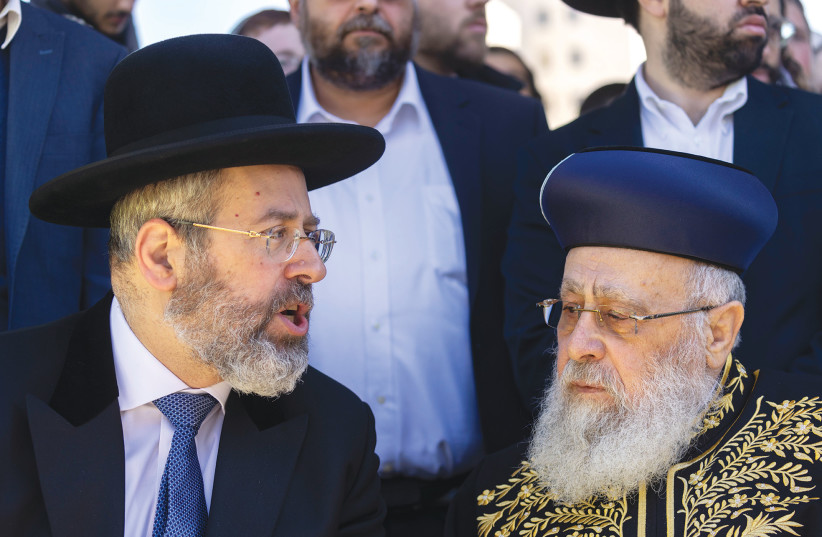
Historically, the rabbinic mantle was bestowed upon those who dedicated significant time to the study of the ancient ways of our people, the vast collection of biblical and rabbinic texts, and the seemingly endless library of Jewish literature. These religious leaders would guide their communities in the adherence to Jewish law and practice as they understood and were taught. How any given individual or community navigated their relationship with and to the halachic-legal framework was guided by the rabbi who served as the repository of information and the decider of the communal norms based on their lineage and understanding of Jewish practice.
Role of a Rabbi in the Modern Age
In the modern age where information of all kinds is just a Google search away, what is the role of a rabbi? How does rabbinic leadership contribute to and support this unfolding narrative of the Jewish collective?
These are not new questions. The Havurah movement of the 1960s emerged as a counter-cultural expression of decentralized Jewish communal leadership. In these havurot (“friendship groupings,” plural of havurah), individuals and families would gather to explore Jewish life and practice in communal fellowships shaped by the community rather than a rabbinic leader. While rabbis took part in havurot across the country, the role of rabbi as decider, disseminator, and sole shaper was replaced with a communal obligation to own and create the collective experience.
Although these pockets of Jewish community were evolving their relationship to Jewish communal life and rabbinic leadership, the education, training, and shaping of rabbis has remained the same. The model of rabbinic training essentially mirrors the academic and secular institutional model of a graduate degree.
The Havurah movement was a calling from the depths of the Jewish soul–a communal seeking and longing for an experiential relationship with God, community, and the traditions of our ancestors. Yet, the training of rabbis, for the most part, focused on the mastery of history, texts, and detailed specifics for the rabbinates of denominational and institutional leadership.
What has become painfully apparent is that there is a disconnect between the historical and projected understanding of the role of a rabbi and the actual modern needs of rabbinic leadership for most of the Jewish people. During and after a recent RAV Retreat (Rabbinic Accelerator Venture) for individuals in our network who embody characteristics of great rabbis but are not yet on a rabbinic path, we wrestled with this. What is the role of a modern-day rabbi? Are rabbinical schools training for what is needed in the field and for the diversity of the Jewish community? How does instant access to the vastness of the Jewish library affect the role of a rabbi and rabbinic leadership?
These questions are only the start of this crucial conversation. Drawing from my own journey, I too was at the same loss named in the latest Atra study almost 20 years ago when navigating my own next steps into the rabbinate. I knew I loved Judaism, the Jewish people, and the idea of God. I also knew that my options of where to explore the depth of Judaism in the way my soul longed for were limited.
When I spoke with rabbinic mentors and guides, the advice I was given was to pick a school where I could keep my head down and get through it. It was a depressing moment of realizing that I was homeless in the denominational silos available for rabbinic training.
After receiving smicha-ordination and exploring this title and responsibility in various roles, I have come to embrace my own personal rabbinate as an honest and authentic expression of my own religious and spiritual life that has emerged from a life of learning, seeking, and exploration. My tenure as the founding rabbi of Base Miami allowed me to cultivate a personal rabbinic presence outside the silos and confines of institutions or denominations.
My focus has and continues to be sharing the meaning, depth, and beauty I have come to appreciate in my own Jewish life and identity to best help others forge their own connection. Through a powerful personalized cultivation of Jewish identity journeyed alongside a community of others seeking in their own way, we can forge meaningful personal and communal Jewish connections and help to awaken an inner calling and kindle the divine spark longing to emerge.
This is not a new model of a rabbi. It is a model that has long since been lost to the sands of time. It is a model of an intimate rabbinic presence, available to and in deep relationship with their students and communities. It is a framework where the cadence of Jewish life is modeled and lived in the intimacy of homes and small gatherings in living rooms and dining rooms.
As our institutions and denominations have grown, we have scaled our communal models and corresponding relationships with spiritual leaders. This scaling has created a dynamic where a rabbi speaks from a pulpit down to their large communities – in the places that still have large communities. And in smaller communities where membership and attendance are in decline, the model generally remains the same.
We are in desperate need of an approachable rabbinate centering personal relationships, small and intimate meaningful gatherings, and deep exploration of all the diversity that Judaism has evolved to become. This model, in addition to the institutional ones still thriving for many, has and will continue to lay a foundation of personal and everlasting Jewish identity that can be passed on for future generations to continue in their own way.
The writer is the vice president of base and rabbinic innovation at Mem Global.