Over the past two years the Jewish people have arguably witnessed the greatest turnabout since the Holocaust and the founding of the State of Israel, and maybe even since the Purim story.
On September 15, 1935, the Nuremberg Laws were passed, classifying Jews as “state subjects” and stripping them of their citizenship and political rights. Over the next 10 years six million Jews were murdered, and millions more were displaced.
Antisemitism increased in Arab lands, and it seemed that life for Jews was heading in a worse direction. But just a few years later, in May 1948, the first sovereign Jewish state was established, and life turned around for the Jews, progressing over the next seven decades.
In the megillah, it is written: “On the 13th day of the 12th month, that is, the month of Adar, when the king’s command and decree were to be executed, the very day on which the enemies of the Jews had expected to annihilate the Jews, the opposite happened, and the Jews got their enemies in their power.”
The phrases “the opposite happened” or “the turnabout” have long been used to characterize the Purim salvation celebrated by the Jews.

The turnabouts that occurred on Purim and also after the Holocaust were so great it seemed absurd to imagine an equally great, or better, turnabout could ever occur.
Yet, in recent years, the Jewish people have witnessed a reversal that rivals their past turnabouts.
Three years ago, Jews in Israel were divided over religious observance and the proposed judicial reform. City council laws and court decisions enacted laws that forced religious practices on the unwilling and forbade religious practices on others.
Thousands of people gathered every Saturday night, and many days in between, to protest for and against the proposed reform.
The divisions came to a head when rabbis were arrested on Yom Kippur for hanging Israeli flags as a mechitza (partition) used to separate men and women during prayer.
The Tel Aviv city council had prohibited gender dividers in public spaces and authorized police to arrest violators.
Earlier in the year, nearly 500 reserve pilots and special forces soldiers threatened not to show up to reserve duty in protest of the reform.
Rising external threats
During this time, Iran had been strengthening its proxies in their ever-tightening circle around Israel and had spent a decade developing advanced ballistic missiles capable of reaching Israel and causing massive destruction.
In the hopes of enticing the Islamic state with a new deal, America and other nations had given Iran sanctions relief.
This gave Israel’s top enemy access to billions of dollars and the resources it needed to continue enriching uranium for its nuclear weapons program and supply its proxies in Gaza, Lebanon, Syria, Iraq, and Yemen.
In Gaza, Hamas had grown to close to 50,000 fighters. These terrorists had the support of Gazans and ran drills for how to cross Israel’s border and attack its citizens.
Hamas built and smuggled thousands of rockets and had a seemingly unlimited supply of small arms like long guns and grenades. With funding from Qatar, it built a tunnel system larger than the New York City subway.
The terrorist organization turned UNRWA and internationally supported hospitals, meant to help Gaza’s citizens, into military facilities that could be used as staging grounds for attacks, planning centers, and hiding places for Israeli hostages.
In the North, Hezbollah transformed from a trained armed force of more than 40,000 fighters to an experienced paramilitary that spent years protecting Assad’s forces in Syria.
The terrorist organization amassed over 100,000 rockets and even had the most sophisticated precision-guided missiles. It had plans to invade Israel and had set up supply bases in Southern Lebanon along the border to aid their attack.
Although it was experiencing a 10-year-long civil war, Syria was used as both a staging ground for attacks against Israel and as a supply line for Iran to supply Hezbollah with the most advanced weaponry.
Former Syrian president Bashar al-Assad was supported and kept in power by Russia and Iran, who sent soldiers to prop up his regime.
Israel hit its lowest point when thousands were killed, maimed, raped, and kidnapped in the Hamas attack on October 7, 2023.
A turnabout has occurred just two years later. While discussions over balancing personal freedom and religion and the role of the courts in Israeli society are still topics of debate, they are not the sources of division they once were.
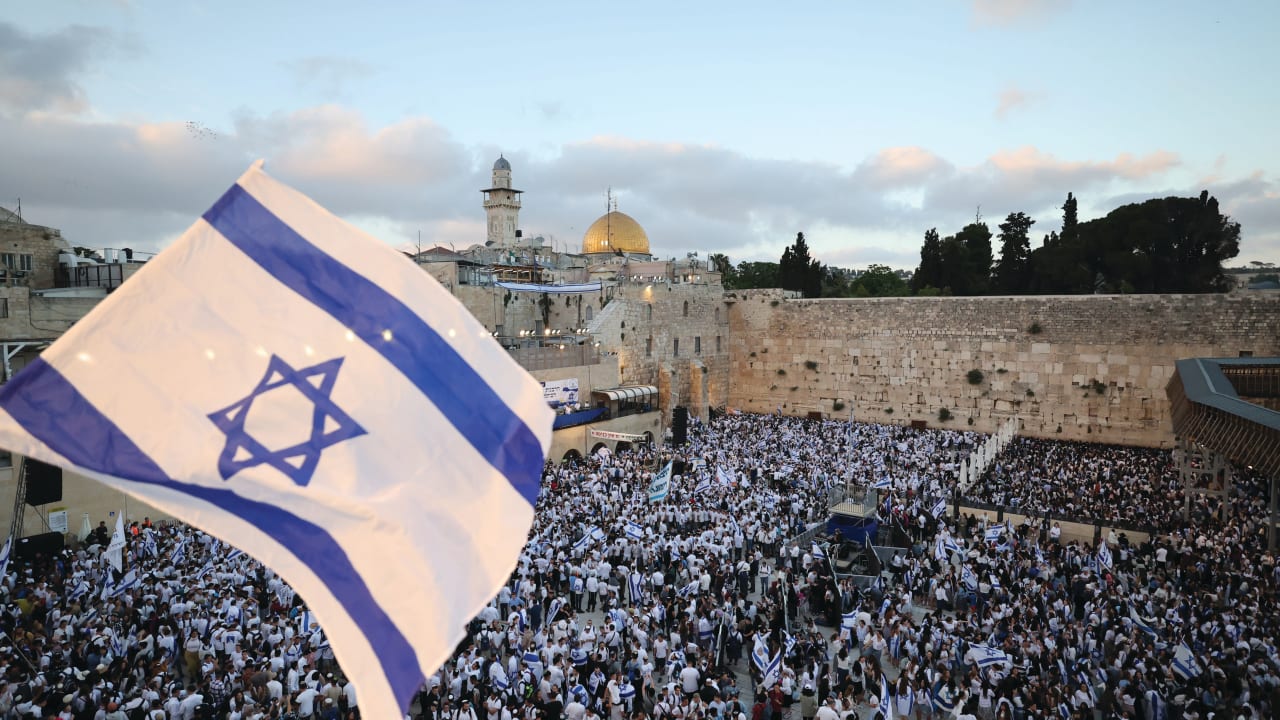
Israel is more united than it has been in years. Numerous wars, missiles falling, and victorious battles have brought the people together in ways unimaginable just a few years ago.
After one of its most successful attacks in history, Iran lies in shambles. At the time this is being written, thousands of Iranians have taken to the streets in protest over Iran’s crushed economy and ineffective governance.
The Islamic Republic spent billions of dollars building its nuclear weapons program and supporting its proxies. After devastating American and Israeli attacks, those efforts are wasted.
Iran did not develop the nuclear weapons, its military has been crushed, its generals and nuclear scientists eliminated, and the future of the regime – if it survives – is a nightmare.
Hamas sealed its own fate on October 7. It knew that Israel would respond with destructive force. Israel has killed its leaders, from Gaza to Tehran, and has eliminated thousands of terrorists.
Not that Hamas cares, but thousands of Gazan Palestinians have been killed, and upwards of 80% of Gaza has been flattened.
UNRWA and other international institutions, like the US Agency for International Development, that funneled billions of dollars of support to Hamas are either shuttered or a broken skeleton of what they once were.
Hassan Nasrallah ruled Hezbollah with Iranian backing for over 30 years. Today he is just another name on a long list of evil men who failed in their life’s mission to destroy Israel.
Thousands of his fighters were killed or permanently maimed in the beeper operation, the greatest intelligence action ever conducted. Hezbollah’s bases in Southern Lebanon and Beirut have been routed, and it is struggling for survival among a population increasingly recognizing Hezbollah as the cause of their problems.
Finally, Assad has lost his country and is trying to open an ophthalmologist practice in Moscow, having cowardly fled to Russia when his country came under attack. Israel has destroyed the Syrian Air Force and Navy and is looking to sign security agreements with Syria’s new leader.
The past three years have witnessed the most profound turnabout in Jewish history since Israel’s founding, rivaling the miracles of Purim and the post-Holocaust rebirth.
From deep societal divisions, existential threats encircling the nation, and the horrors of October 7, Israel has emerged transformed and united as never before.
This breathtaking reversal affirms the enduring resilience and divine providence that have defined the Jewish people across millennia.
The writer is a Zionist educator at institutions around the world and recently published a new book, Zionism Today.