This week, the Central Bureau of Statistics published its annual Quality of Life Index for the country’s major cities.
Jerusalem ranked last.
Yes, last.
On the surface, it’s a painful headline. Israel’s capital, our historic and national heart, sits at the bottom of the table. But anyone who truly knows Jerusalem from the inside understands that the real story is more complicated, and that the future will look very different.
The Quality of Life Index relies heavily on economic and employment indicators: workforce participation, income levels, matriculation rates, and integration into the labor market. In Jerusalem, it’s no secret that the city’s unique demographic structure – with large ultra-Orthodox and Arab populations, parts of which do not yet participate in the conventional economic model – pulls some of these indicators downward.
These are real challenges, and they must be addressed seriously.
But they do not tell the whole story. And they certainly do not reflect the quality of life of the productive, working, studying, and serving population that chooses to build its life here – a public whose day-to-day reality is much stronger than the statistics suggest.
Meanwhile, on the ground, something entirely different is happening.
Major developments in Jerusalem
Jerusalem is in the midst of an unprecedented development boom, one that, as someone who grew up in this city and watched it struggle for years, I could only have dreamed about. Millions of square meters of employment space are being built in the heart of the city – not in remote industrial zones but in the urban core. Offices, hi-tech campuses, culture, and commerce.
Every project that opens its doors changes the city’s trajectory. The new Gav-Yam hi-tech campus in Givat Ram, recently launched, and the rapidly advancing city entrance complex are already shifting reality and moving the needle in the right direction.
Alongside jobs, which are the most critical factor, especially when Jerusalem’s average salary still stands at roughly half that of Tel Aviv, tens of thousands of housing units are under construction. For the first time in decades, these include small apartments and long-term rental options for young people and families, not just luxury developments marketed abroad.
Public transportation is also being transformed, with the light rail network expanding in ways that will fundamentally reshape mobility across the city.
And beyond all of this, Jerusalem has assets that no other city can replicate: unparalleled history and national significance, government institutions, leading universities and research centers, a strong public healthcare system, excellent and diverse education, more than 80 cultural institutions, and enormous tourism potential in quieter times.
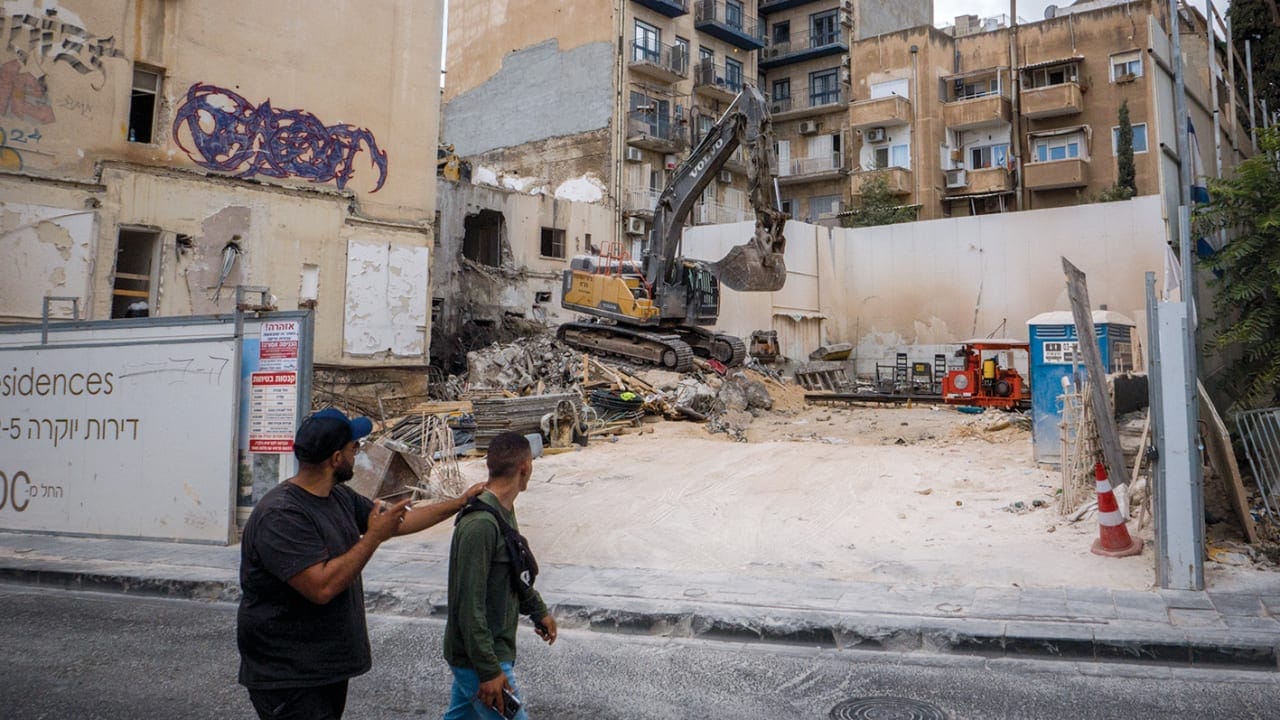
Yes, it’s difficult right now. At times, the city feels like one large construction site.
But anyone paying attention understands where this is heading: toward economic growth and prosperity.
Could all this investment have happened decades ago? Of course. But even partial completion will attract stronger, more productive populations that will ultimately improve exactly the kinds of indicators measured in reports like this one.
At the same time, we must be honest about the problems that remain. Working Jerusalemites pay the highest municipal taxes in the country, while more than half of the city receives significant income-based discounts. Too many government budgets are still allocated sectorally. Public transportation must improve now, not only in the future.
And we need bolder steps to strengthen the serving, working population – including on weekends.
The list of urgent tasks is long.
That is precisely why we are here. Not to complain but to act. Not to ask “Why not?” but to push forward and ask “How yes?”
That is the approach we lead in Hitorerut. It is why we fought to hold the portfolios of young residents, economic development, and business promotion. Our mission is clear: to strengthen a Zionist, productive, and pluralistic Jerusalem; to be the most creative and youthful voice at every decision-making table; and to work in partnership with the mayor and our partners in the municipal coalition to ensure that the city is steering in the right direction.
In short, the Central Bureau of Statistics rankings reflect yesterday’s gaps. The cranes reflect tomorrow’s Jerusalem.
If we keep our heads above water through this period of construction, we will emerge stronger on the other side.
I’ve heard a thousand eulogies for this city.
We’re here to stay.
The writer is the deputy mayor of Jerusalem and leader of Hitorerut, a local political movement uniting Jerusalemites, secular and religious alike, from the Left, Right, and Center.