
Skin for grafting is in short supply in ordinary times, and in times of war, it is especially necessary. A pioneering study, driven by the ongoing war and the surge in severe burn wounds, accentuates the urgent need for better treatment solutions.
Now, researchers from Tel Aviv University (TAU), along with Sheba Medical Center in Tel Hashomer, have bioengineered skin for grafting onto burn victims that can cut in half the time needed for the victim’s skin to heal.
The team said that “Severe burn injuries represent a significant clinical challenge due to their complex healing process and the high risk of complications, including infection, scarring, and contracture formation, in which skin and other body parts shorten and tighten – thus restricting movement of that part of the body.”
Israeli innovation seeks to combat major global health issue
Severe burn wounds present a major global health issue, affecting millions annually and also resulting in high morbidity, scarring, and lengthy recovery.
For nearly four decades, the treatment for extensive burn wounds has relied heavily on donor autologous skin grafts (transplanting skin from one area of a person’s body to another reduces the risk of rejection by the patient’s immune system) and cultured epidermal autografts (CEA), created by growing a patient’s own skin cells in a lab and then transplanting them onto burn wounds or injuries.
However, CEAs are limited by fragility, shrinkage, the lack of a dermal layer, and risks of contamination. CEAs require a long preparation time and high production costs; it takes two to four weeks to culture the sheets under strict sterile conditions to prevent contamination and ensure successful cell growth. In addition, the final grafts can contract by more than half of their original size when detached from the culture dish.
The team said that the bioengineered skin, produced from the patient’s own cells, is more flexible, stable, and robust than existing treatments, thus making it easier to handle. In a full-thickness wound model, it closed the wound twice as fast as standard therapies.
The innovative study has just been published in the journal Advanced Functional Materials under the title “Stable, easy-to-handle, fully autologous electrospun polymer-peptide skin equivalent for severe burn injuries.”
The team was led by Prof. Lihi Adler-Abramovich; doctoral student Dana Cohen-Gerassi from the Laboratory for Bio-Inspired Materials and Nanotechnology at the Goldschleger School of Dental Medicine, and Dr. Amit Sitt from TAU’s School of Chemistry.
Surgical intervention is frequently needed urgently to treat second-degree burns and even more serious ones to restore skin, prevent infection, and save lives, said Adler-Abramovich.
“The current gold-standard treatment is ‘autologous skin grafting’ in which healthy skin is harvested from another area of the patient’s body and transplanted onto the burn site.” But she added that this technique has significant disadvantages, especially the need to cause harm to healthy tissue to treat the injury; this becomes especially problematic when the burns cover large parts of the body and there is only a limited amount of intact skin.
“One of the most advanced alternatives, currently offered in Israel only at Sheba, is CEAs. Instead of removing a large section of skin, a small biopsy is taken, and cells extracted from that sample are cultured in the lab to produce skin grafts for transplantation.
“While this method avoids donor-site damage, it comes with several challenges: First, the skin cells are grown on a layer of mouse-derived feeder cells that require strict regulation to ensure none of these cells remain in the graft; Second, once removed from the culture dish, the CEA shrinks by over 50%, significantly reducing yield. Up to 30 grafts may be needed to cover a single area, such as an arm or leg.
“Finally, the lab-grown skin consists of only the upper epidermal layer, making it extremely thin, fragile, and prone to curling at the edges.”
Adler-Abramovich told The Jerusalem Post that it could take five to 10 years to be able use their technique on burn patients.
“CEAs are used today, but our development of a nanofiber scaffold mixed with a bioactive peptide is much better. Our scaffold is made of a polymer called PCL – which is already approved by the US Food and Drug Administration (FDA) – and combined it the peptide,” she said.
“Our technology is still preclinical, used on mice in the lab. It will take time to scale up the technique and get permission to test it on patients, and then to get Health Ministry and FDA approval. But our aim is that it will be offered in every hospital in the country. There is also much interest among doctors around the world,” she continued.
The need is particularly urgent in wartime
“IT COULD also be used to treat gastrointestinal ulcers and in cases which require regeneration of diabetic sores in diabetics who are at risk of losing limbs.”
The need for advanced solutions is particularly urgent in wartime, with many soldiers and civilians suffering from burns. For them, a hard-wearing bioengineered graft could significantly improve chances for recovery and a good quality of life.
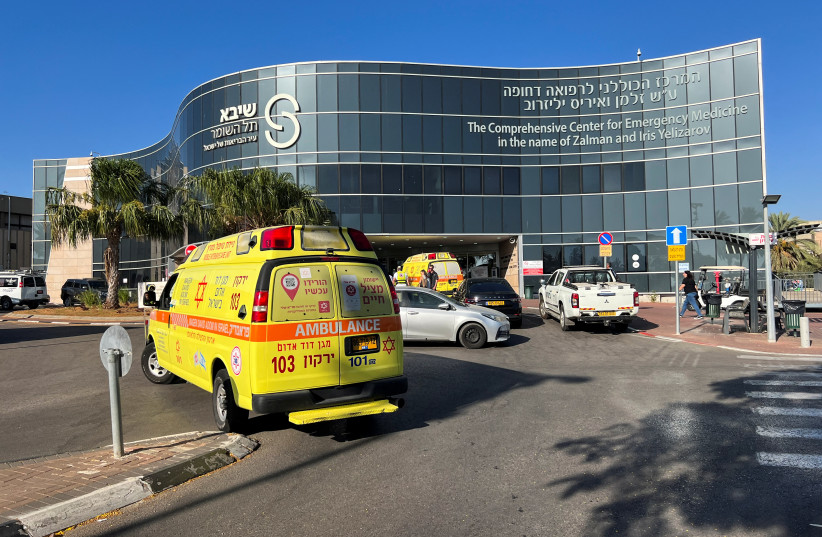
“Since the Iron Swords War began on October 7, 2023, Sheba has treated many young people with burn injuries,” Di Segni said.
“At such a time, bringing knowledge accumulated in the lab directly to the patient’s bedside becomes an urgent and tangible goal. Our aim is to develop a graft that can truly transform the process of recovery,” he explained.
The team’s aim was to produce multi-cellular, multi-layered bioengineered skin grafts designed to mimic the properties and function of natural skin, without shrinking, tearing upon contact, or relying on animal-derived additives.
The team added that their graft is unique in that it is durable, flexible, easy to handle, and doesn’t shrink. Implantation in model animals has yielded impressive results, accelerating the healing process. While the standard treatment closes half of the burn wound in eight days, with the new method, it took only four days. Even vital skin structures, such as hair follicles, also began to grow.
Another advance is that the nanofiber scaffolds are made from easily available biocompatible materials and produced via a scalable spinning process that will make possible large-scale production of fiber sheets – and adding more substances to promote the healing process.