Israel Antiquities Authority
Rare half-shekel coin used in biblical census count discovered by archaeologists in Judean Desert
The survey is an ongoing project by the IAA meant to protect archaeological sites in the Judean Desert from looting and unauthorized excavations.


University of Haifa student discovers 12th century Crusader sword off of Israel’s northern coast
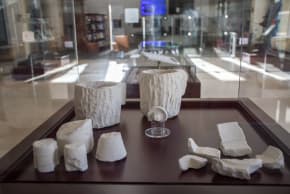
Second Temple workshop found on Israel's Mount Scopus during investigation into antiquities thieves
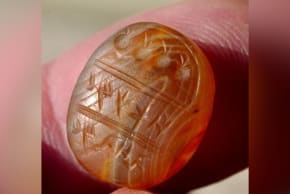
Stone seal from biblical Kingdom of Judea discovered during construction in northern Israel
Hackers breach Israel Antiquities Authority's social media
In their post, the hackers stated, "Soon, all Israeli commanders will face the consequences of their war crimes," along with a photo of a missile and Khamenei.

Archaeologists reveal mythological scene on ancient sarcophagus found in Caesarea
The sarcophagus was discovered outside the known walls of Caesarea, indicating that the ancient city was far more extensive than previously thought.

Rare menorah capital found near Jerusalem to be unveiled on Independence Day
This stone capital is considered one-of-a-kind and has not been found anywhere else in the world, according to the IAA.

Police find ancient treasures, weapons in Dimona antiquities probe
A Dimona resident was detained for questioning after the search uncovered not only the archaeological treasures but also a cache of weapons, ammunition, and currency.

Digging too deep? Political dispute delays archaeological congress in Israel
Greenberg was expected to lecture on the “archaeologization” of Israel in a session on archaeology and politics, before his participation raised concerns from right-wing activists.

TAU archaeology prof. faces calls to be dropped from nat'l conf. for West Bank dig stance - report
After publicly boycotting an archaeological conference in Judea and Samaria, a TAU professor finds himself at the center of an argument on his role as a lecturer at a national archaeology conference.

Tiny hands, ancient find: Israeli toddler uncovers 3,800-year-old scarab
The young girl from Moshav Ramot Meir uncovered an ancient scarab amulet during a family trip to Tel Azeka, near Beit Shemesh.

The nun who lived in chains: First-ever evidence of extreme asceticism found near Jerusalem
Asceticism is the practice of denial of physical or psychological desires in order to attain a spiritual ideal or goal, often self-inflicted.

Ancient arrowheads in the Negev reveal human trafficking caravans from 2,500 years ago
Located near Tlalim Junction, the excavation site has revealed dozens of tombs containing a rich variety of artifacts.

Benyamin Storchan: An archaeologist who really digs Israel
While fully employed at the IAA, he earned a master’s degree at Bar-Ilan University and is now a doctoral candidate at Ben-Gurion University.
