Archaeological study
Israeli researchers use ancient stone tools to trace hunter-gatherer migrations
The study focused specifically on the late Middle Paleolithic period, when ancient hunter-gatherers attempted to navigate intense environmental shifts in the South Caucasus region.
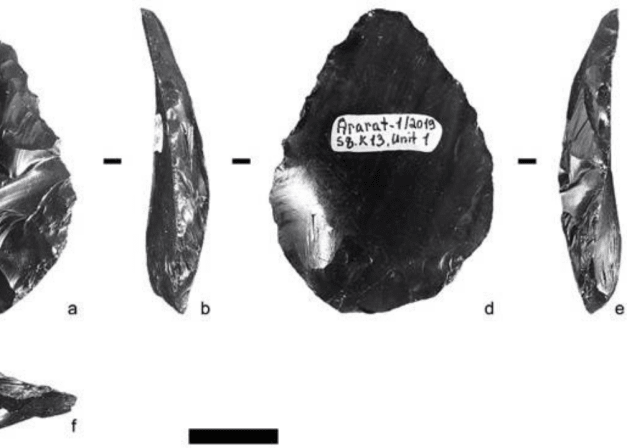

Prehistoric hunter-gatherers stayed connected across 200 kilometers, Israeli study finds

Is Monte Verde really 14,500 years old? Researchers clash over true age of Chile's ancient site

Snake snacks? Hunter-gatherer diets in northern Israel included reptiles, new study suggests
Neanderthal children in central Europe may have hunted turtles for materials, not for food - study
The study also floated the possibility that the turtles had been hunted for “their taste or for an assumed medicinal value.”

Early humans may have begun eating elephants, large animals 1.8 million years ago - study
The fat stored in Elephant bones, which is rich in essential nutrients, is thought to have played a role in supporting the growth of larger brains in the Homo erectus lineage.

Ancient charcoal found in northern Israel sheds new light on how early humans lived - study
Within the charcoal, archaeologists found traces of ash, willow, oak, olive, pistachio, grapevine, oleander, and the oldest known evidence of pomegranate wood in the Levant.

Early humans in South Africa used dedicated quarries for stone as long as 220,000 years ago - study
Based on this, researchers suggest that early homo sapiens planned for the long-term acquisition of resources earlier than previously thought.
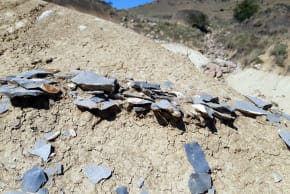
Ashes of Pompeii: New study confirms ancient city's role within Rome’s global trade route
Remnants of a “grape-derived product” was also found within one of the burners, the study noted, consistent with literary and artistic depictions of wine being used for ritual purpose in Rome.

How archaeologists used technology to rediscover ancient Egyptian city on the Nile Delta - study
The site holds three prominent mounds, known as Koms A, B, and C, with Kom C selected for investigation due to its history spanning the Predynastic period through the Early Islamic era.

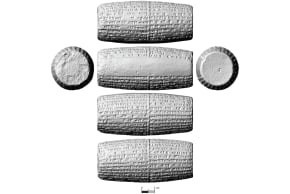
Clay cylinders found in Iraq bear writings of Babylonian king who besieged Jerusalem, study reveals
The translation appears to align with a description of Nebuchadnezzar from the Book of Daniel, which depicts him walking on his palace roof in Babylon while boasting of his construction projects.
Native American use of dice, probability predates known Old World dice by millenia - study
In total, archaeologist Robert Madden observed 659 sets of Native American dice from 57 archaeological sites across 12 different states.
Neanderthals who lived in Siberian cave millenia apart were distant relatives, study finds
Further analysis of the genetic similarity showed that Neanderthals in the Altai region likely lived in groups of fewer than 50 people.

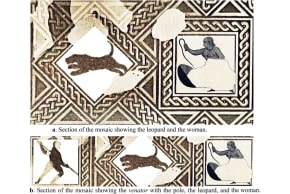
Lost mosaic shows first visual depiction of women fighting beasts in Roman arenas - study
The mosaic, recovered in 1860s Reims, France and dated to the third century CE, shows about 35 different gladiatorial and hunting scenes, each surrounded by diamond or square-shaped decorations.