Israel Antiquities Authority
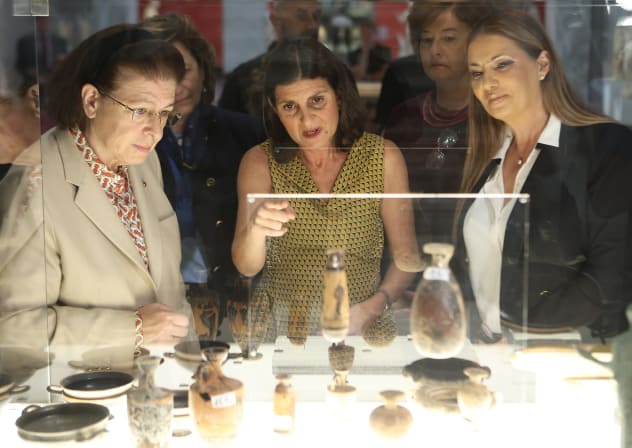
Israel returns 22 artifacts to Greece in first antiquities repatriation between Jerusalem, Athens
The antiquities had been seized during an operation conducted by the IAA's Theft Prevention Unit, before being identified as those belonging to Greece.

Israel unearths 2,000-year-old section of Jerusalem aqueduct that brought water to Temple Mount

Oct. 7 Gaza border shelters designated antiquities as safeguard against 'clean up' projects

How to move an ancient mikvah? Inside the IAA's operation to conserve a Second Temple ritual bath
Archaeologists discovered a unique structure in the City of David
The team believes that the structure was in use until the 8th century BCE, the middle of the period when the Kings of Judah ruled.

Israeli researchers unearth unique Byzantine-era monastery near Kiryat Gat
"The mosaic discovered in Kiryat Gat is one of the most unique ever found in Israel," said Mark Avrahami, Head of Artistic Conservation at the Israel Antiquities Authority.

Ten-year-old boy finds 100-year-old golden cross medallion in Jerusalem
“This cross medallion is not considered an antiquity by law as it is ‘only’ 100-200 hundred years old or so, but it is a unique object," said Dr Re'em of IAA.

A Ming mystery: Earliest known Chinese inscription in Israel discovered in Jerusalem
While ancient Chinese porcelain has been found in Israel before, this is the first discovery featuring actual Chinese inscription.

Girl finds 3,500-year-old Egyptian scarab amulet during family trip in Hod Hasharon
After looking online, the family realized the importance of the object and contacted the Israel Antiquities Authority.

Anatolia's gladiators: Ancient stelae offer new insights into their complex lives
Grave stelae found in the provinces of Anatolia are a main source of information about Roman gladiators.

Recent excavations reveal King Sennacherib's military impact on the economy of the Kingdom of Judah
Excavations in Jerusalem revealed that Sennacherib’s 701 BCE military campaign impacted Judah's economy, uncovering administrative changes under King Hezekiah.

Gods and monsters: Ancient Greek wall paintings in Ashkelon to be made accessible to public
The paintings depict Greek mythological characters such as Demeter, Medusa, and nymphs and include floral decorations and images relating to nature.

Newly discovered biblical moat in Jerusalem reveals city's ancient fortifications
A 3,500-year-old trench found in Jerusalem's City of David reveals the city's northern fortification, resolving a 150-year-old debate.

Rediscovering ancient luxury: A 3,800-year-old scarlet textile unveiled in the Judean desert
Scarlet, alongside royal blue (Tekhelet) and purple (Argaman), was revered in the ancient world for its rarity and expense.
