Neanderthals
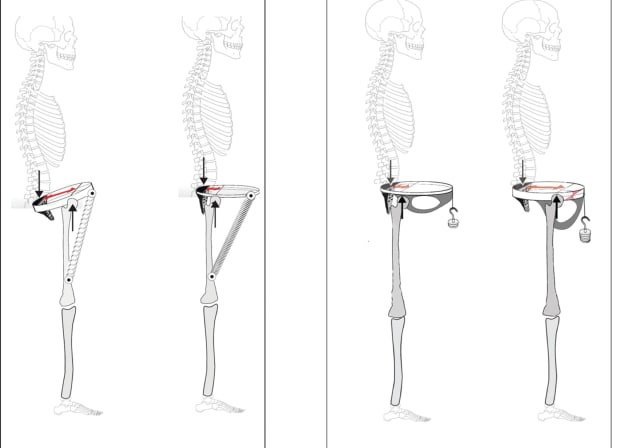
Modern human men evolved unique hip 'spring' for efficient walking, Israeli-led study finds
A new Tel Aviv University study challenges assumptions about the Neanderthal pelvis, finding that modern human males evolved a distinct walking mechanism.

WATCH: A Paleolithic time capsule: Rare prehistoric cave discovered near highway outside of Haifa

Neanderthals' ancient toolkit included hammers, blades made from rhino teeth, study finds

Neanderthal tooth from Siberian cave shows signs of earliest-known invasive dental surgery - study
World's oldest Neanderthal fingerprint found on 43,000-year-old pebble in Spain
Researchers suggest the pebble may represent one of the earliest human facial symbolizations in prehistory.

Archaeologists date 80,000-year-old Neanderthal bone spearhead found in North Caucasus cave
This finding disproves the myth of Neanderthals' primitiveness: they planned complex composite tools.

Earliest symbolic burial practices found in Tinshemet Cave, Israel
Evidence suggests Neanderthals and Homo sapiens shared burial customs and symbolic behaviors.

Researchers precisely date Lapedo child, Neanderthal-Human hybrid
'The new date for the child is consistent with original estimates for the age of the burial, but it has changed our interpretation of the burial events themselves,' said lead author Bethan Linscott.

Neanderthal inner ears labyrinth hold clues to their ‘bottleneck event’, a rapid decline in numbers
Drastic climatic changes likely had profound impacts on the genetic and morphological variability of the Neanderthal lineage.

Blood incompatibility with Homo sapiens may have led to Neanderthal extinction
If Neanderthal women mated with Homo sapiens or Denisovan men, there was a high risk of newborns having neonatal hemolytic disease.

Researchers use skeletons from Israel, Iraq to find source of Neanderthals' super strength
Neanderthals relied on strategic ambushes that required explosive strength and precision, allowing them to overpower large prey such as lions, cave bears, and prehistoric elephants.

Child, teen, and adult: Neanderthal teeth found at Arbreda Cave illuminate prehistoric life
The research in the *American Journal of Biological Anthropology* suggests Neanderthals at Cova de l'Arbreda alternated between short seasonal stays and longer settlements.

University of Buffalo researchers uncover ancient roots of carb addiction
This finding suggests that Homo sapiens had a taste for starch much before the domestication of crops shaped the human diet.

Discovery in Prado Vargas Cave suggests Neanderthals practiced abstract thinking
Researchers believe marine fossils were deliberately collected by Neanderthals, despite holding no practical value.
