Trump’s Iran strikes set off bipartisan war powers revolt on Capitol Hill
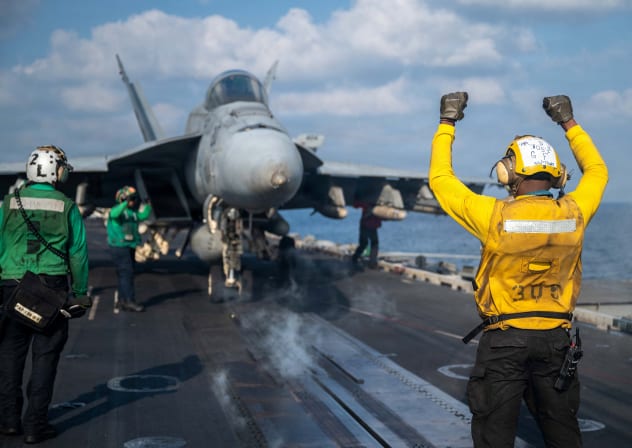
Operation Epic Fury began early Saturday, with Trump confirming US strikes on Iran alongside Israel, igniting debate in Washington over escalation and presidential authority.
Hezbollah expressed solidarity with Iran following US and Israeli strikes, warning of regional consequences while stopping short of saying it would enter the conflict.
British Prime Minister Keir Starmer said UK forces and aircraft are taking part in coordinated defensive efforts in the region but are not involved in US and Israeli strikes on Iran.
US President Donald Trump has for weeks signaled the US was interested in seeing regime change in Iran, but has not given in any detail Washington’s thinking on who could lead the country.
Israel and the United States struck Tehran and western Iran on Saturday, February 28, aiming to curb ballistic missile launches toward Israel as Iran began retaliatory fire.
State media in the United Arab Emirates said one person had been killed in Abu Dhabi, but gave no details.
A senior Syrian security source familiar with intelligence reports said: “There are indications that some ISIS detainees managed to escape from certain prisons during the past months.”
Grok gave the clearest single-day answer in the original run: Saturday, February 28, tied to the outcome of talks in Geneva.
One video showed people dancing in the street, while another showed young Iranian men shouting “I love Trump” as smoke is seen billowing from a nearby strike.
Consider what that same sum could buy in Iran, where families navigate food insecurity, punishing inflation, and chronic medicine shortages.
In the past, some Kurds were able to seek refuge in Iran during Saddam Hussein’s genocidal poison gas attacks. However, the Iranian regime has been persecuting Kurds over recent decades.