
Andy Burnham, who is on track to become Britain’s next prime minister following Keir Starmer’s resignation last month, apologized for his party’s handling of the aftermath of the Oct. 7, 2023, Hamas mass killings in Israel, saying that it should have done more to push for a ceasefire and called for exerting greater pressure on the Jewish state today.
His comments prompted a joint response from the Board of Deputies of British Jews and the Jewish Leadership Council, which said they had contacted his team to express “significant concerns” about his remarks.
Burnham made his comments in a video statement on Thursday in response to questions from the public. Burnham is likely to become the next prime minister after gaining the overwhelming support of sitting Labour members of Parliament. To date, no one has challenged him for the party’s leadership ahead of a July 17 deadline.
“I know many people feel that at the start of Israel’s military action in Gaza, my party didn’t get it right, and I am sorry about that,” he said. He added that he supported further sanctions on Israelis involved in the violence in Gaza, measures to ban trade with Israeli settlements and restrictions on arms licenses to Israel, saying there was “increasing evidence that war crimes appear to have been committed.”
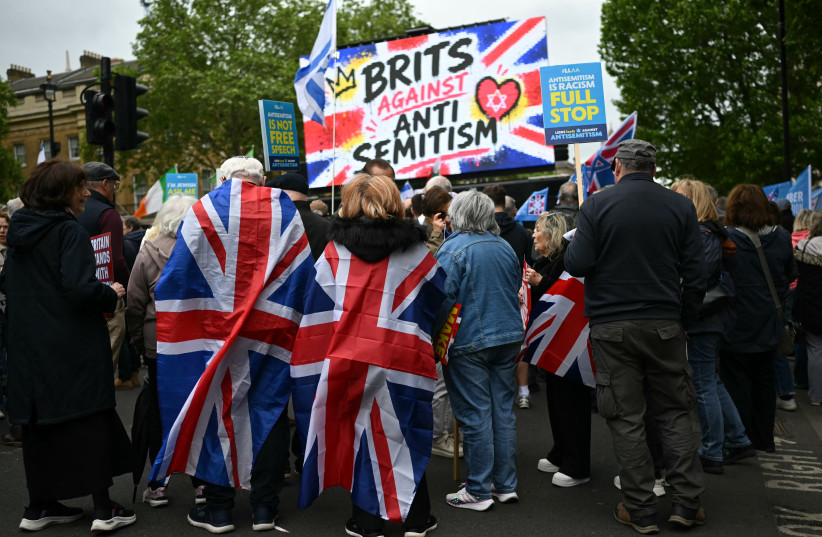
He also condemned increased antisemitism in Britain, and said that tackling antisemitism did not contradict holding Israeli Prime Minister Benjamin Netanyahu’s government to account.
Lawmakers are pushing for Israel criticism
His comments came as lawmakers across the political spectrum have pushed for increased condemnation of Israel and sanctions on the country.
“The unbearable suffering in Gaza is a scar on our collective conscience,” Burnham said. “The killing of innocent Palestinians, including children,” was “completely unacceptable,” he added, declaring that Britain had to do more to “put pressure on the Israeli government.”
He described the country as “too slow to call for a ceasefire” and that “we must now do more to strengthen our approach” as “Israel continues to violate the ceasefire agreement, killing innocent Palestinians.”
In their response, the Board and JLC said they shared “concern for the humanitarian situation in the Gaza Strip” but stated that the conflict “cannot be understood without reference to the role of Hamas not only in launching the conflict but in perpetuating the war through the holding of hostages, war-fighting entirely from within the civilian population, and [their] ongoing refusal to cede power and disarm, in line with the 20 point peace plan.”
They added that the conflict also could not be understood without reference to Hamas’ regional backers and allies, including Iran and Hezbollah. Burnham addressed none of this in his comments.
Burnham condemned UK antisemitism as 'appalling'
Burnham did, however, reiterate his condemnation of Hamas, describing the Oct. 7 attacks as “monstrous,” stressing that he denounced them “as strongly today as I did in the immediate aftermath.”
He said that he also condemned “the increase in appalling antisemitic attacks here in the UK and those who seek to divide our communities by targeting Jewish people.”
“I felt first-hand the anxiety in our Jewish community and the very real threat they face,” the former mayor of Greater Manchester said, referring to the Yom Kippur 2025 attack on the city’s Heaton Park synagogue in which two people were killed.
The Board and JLC welcomed Burnham’s “zero tolerance approach to antisemitism” and affirmed his assertion that “there is no contradiction between fighting antisemitism and disagreeing with actions of the Israeli government.”
However, they said, “Antisemitism cannot be confronted without addressing all its drivers,” arguing that in Britain that includes “Islamist, far left and far right extremists who go beyond criticism of the Israeli government to a place of hatred directed at Jews and Israelis.”
Their joint statement pointed out that Burnham knew “first hand the links between hatred of Israel, antisemitic extremism and deadly violence against British Jews,” adding that, “in a country in which antisemitism has become more normalized, more extreme and more violent, we call on our leaders to show the utmost care in their rhetoric in relation to the conflict.”