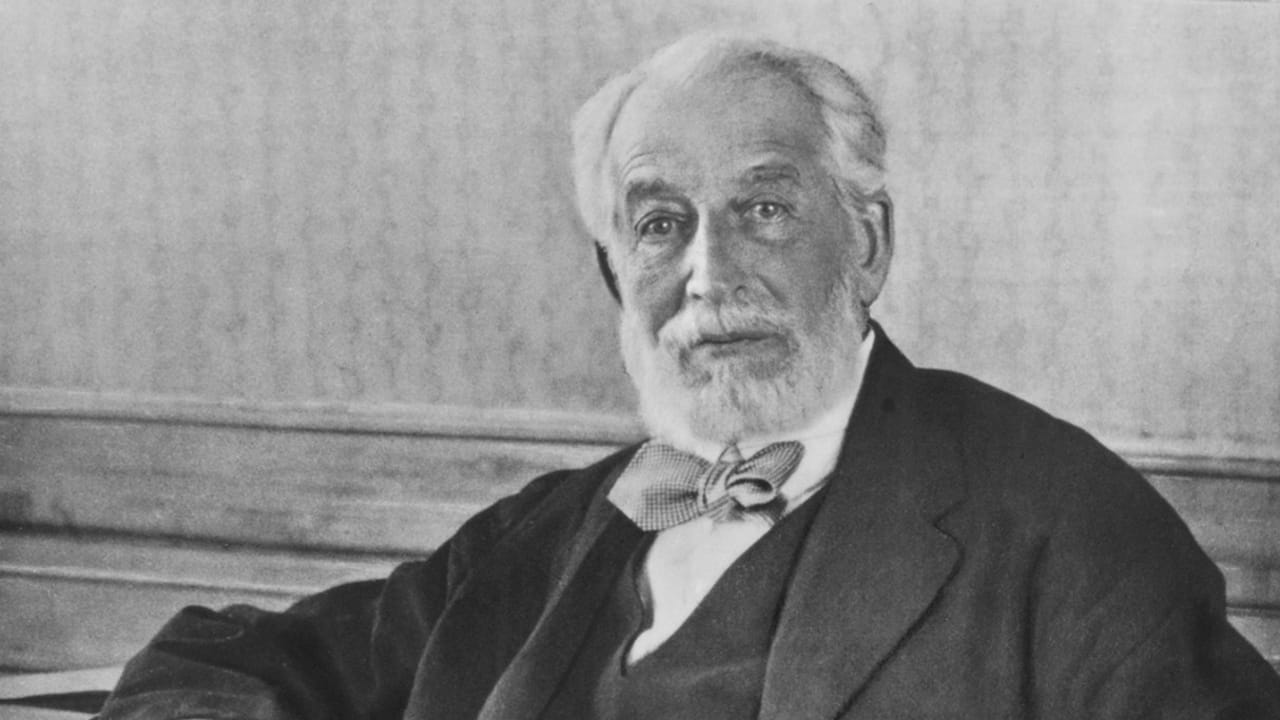
Israeli wine began a quality revolution in the 1980s, took off in the 90s and came of age in the 2000s. People forget, though, the immense contribution of the man who founded the modern wine industry. The credit goes to the person who was then referred to as the “Known Benefactor”; we know him better as Baron Edmond de Rothschild.
You only have to research some of the place names we take for granted, to give an immediate impression of the influence of Baron Edmond de Rothschild. He named Zichron Ya’acov after his father. Bat Shlomo and Mazkeret Batya were named after his mother. Binyamina was named after him. Meir Shefaya was named after Edmond’s grandfather Amschel Mayer Rothschild.
Rothschild founded Carmel Winery in 1882, or at least that is what they say. In fact, the truth is more complicated. The first winery was not founded until 1890 and became known as Rishon Le Zion Cellars.
The name Carmel (root Kerem-El, God’s vineyard) was not used until 1896, when Carmel Wine Co., an export marketing company, was formed. From 1902, the name Carmel Oriental was adopted for the local market, which extended not just to Jerusalem and Jaffa, but also to cities as far afield as Cairo, Beirut, Damascus, and Constantinople – indeed, throughout the Ottoman Empire.
Agudat Hacormin (the Society of Wine Growers) was formed only in 1906. It was called Société Coopérative Vigneronne des Grandes Caves in French in honor of the baron. The two largest wineries in the country were Rishon Cellars and Zichron Ya’akov Cellars. They traded as Carmel Wine Co. in Europe and America, and Carmel Oriental (Carmel Mizrahi in Hebrew) in the Ottoman Empire.

So how did Carmel get away with the alternative truth that they were founded in 1882? The answer was that the first three experimental vineyards were planted in Rishon and Zichron in 1882-1883. Furthermore, the baron did first become involved in the settlement project late in 1882. On this basis, Carmel decided they were founded in 1882. The experimental vineyards and the first involvement of Rothschild were a tenuous retrospective justification.
At home in the Holy Land
Baron Edmond de Rothschild was the third of three brothers. His elder siblings managed the family bank and financial interests. Edmond was a lot younger, and suffered from being “spare,” a term we understand these days. He was, however, wrapped up with his own hobbies, which included art and science. He was a dandy, always immaculately dressed, usually with a bow tie.
He had given donations to Israel before, in particular to Karl Netter’s Mikveh Israel Agricultural School, but it was more a case of signing the obligatory occasional cheque, rather than the showing of a firm commitment to his fellow brethren or the Holy Land. The school, the first to bring European cuttings of vines to Israel, taught many of the new settlers the fundamentals about agriculture.
The pioneering, idealistic, religious founders of Rishon Lezion and Zichron Ya’akov were respectively from Russia and Romania. Life was brutally hard from the very beginning. Children were documented as starving and they sought urgent assistance. Rothschild’s interest was roused by two meetings, which reeled him in. Firstly, Rabbi Shmuel Mohliver met with him in late 1882. He was a founder of Hovevei Zion (Lovers of Zion). Three weeks later, Rothschild met Joseph Feinberg, founder of Rishon Lezion, and heard more specific pleas for assistance.
Something clicked with Rothschild at these meetings. He offered to help. His first measurable investment was to pay for digging the well they needed, which may still be seen in the central coastal city. He also sent agronomist Justin Dugourd to survey the agricultural possibilities of the Holy Land and report back.
The farming villages planted wheat and potatoes, because they were necessities, but they did not succeed in the coarse, sandy soils of the coastal plain. They then went through the experimental process of planting anything and everything. Most famous were the efforts to plant mulberry trees with plans to make silk.
However, by 1884, they realized that grapes were what grew well. Dugourd’s survey, the experimental vineyards, and any casual reading of the Bible proved what was known but not internalized: vines have always been at home in the Holy Land.
The metamorphosis
Here, there was a happy coincidence. Baron Edmond de Rothschild was the owner of Chateau Lafite, together with his brothers. Even then, it was arguably the most famous winery in the world. When Rothschild started setting up an administration framework to manage his investments, he also employed agronomists with wine knowledge and experience.

They immediately saw similarity between Palestine (as it was then called) and the South of France. Mediterranean varieties were therefore planted and the new farming villages started to focus on viticulture.
The metamorphosis of Baron Rothschild from generous donor into committed Zionist began in 1887 when he visited the country. He fell in love with the hills, the sea and the vineyards, particularly in the Zichron area. For the first time, his personal commitment developed into a vision. He decided to create a wine industry.
On a personal whim, he insisted on planting Bordeaux varieties such as Cabernet Sauvignon, Cabernet Franc and Malbec. All his celebrated agronomists were up in arms against this, but Rothschild would not be moved. He berated them for their misgivings and explained that they must make very good wine. He said that there was no place competing with the low-priced, bulk wines of Algeria, Bessarabia (Moldova), and Georgia.
Because of Phylloxera, the aphid that destroyed the vines of Europe, they brought the cuttings from Kashmir, where the Rothschilds had a disease-free nursery. These became known as “the Indian vines.” It will interest some that on the recommendation of Charles Mortier of Chateau Lafite, the first winemaking consultant, they planted more Cabernet Franc than the now more popular Cabernet Sauvignon.
The two largest wineries in Israel were built: Rishon Le Zion Cellars was established in 1890 and Zichron Ya’akov Cellars followed in 1892. A winemaker was sent from Bordeaux. These were large well-equipped wineries, which used the first electricity and telephone in Israel. I like to call this the French Revolution of Israeli wine.
Many francs, many PMs
However, they did not predict the heat of the harvest season. We know what it can be like in July and August. The wines in the early years turned to vinegar. Dropping large cubes of ice into the fermenting barrels and a rudimentary pipe system running with cold water did not help enough.
Rothschild understood that he had no alternative but to take drastic action. Using the skills of a Templar engineer called Schumacher, he built deep, underground cellars at both wineries, to better control the temperature of the wine. The project took from 1893 to 1896.
At one stage, the Sultan demanded that building be stopped – he thought the Jews were building a military installation. However, diplomatic schmoozing and bribery helped. In Carmel’s accounting books in the early years, the word baksheesh appears quite frequently!
The building continued and the costs were considerable. Taking as an example, the famous Rothschild wineries alone. Chateau Mouton Rothschild had been purchased by Nathaniel de Rothschild in 1853 for one million francs, which would be at least tens of millions of US dollars today.
He was from the English Rothschild branch, but was also Edmond’s brother-in-law. Chateau Lafite Rothschild had been purchased by Baron James de Rothschild (Edmond’s father) in 1868 for four million francs. The establishment of Carmel by Baron Edmond de Rothschild cost no less than eleven million francs!
Carmel has made wine in three centuries, under the auspices of the Ottoman Empire, British Mandate and State of Israel. The historic winery of Israel held the wine industry together through difficult years until the quality revolution began. It is a winery that tells the Israel story. No less than three future prime ministers worked there. That must be unique!
David Ben-Gurion worked in the winemaking department at Rishon Le Zion. The memory of the aromas of wine fermenting made him so nauseous that he was not able to enjoy wine for many years after. Levi Eshkol managed the vineyards around Rishon Cellars. It was then like a Bordeaux Chateau, until it was realized that real estate was more profitable than vines. The third was Ehud Olmert, from Binyamina. Carmel remains Israel’s largest winery.
Monuments of generosity
They stopped making wine at Rishon Cellars in 2010 and closed the offices there in 2016. The winemaking is now being done at a new winery at Alon Tavor in the Jezreel Valley. Zichron Ya’akov Cellars remains as a visitors’ center. This preserves the historic winery building, which is important.
It is Israel’s oldest winery building, and possibly Israel’s oldest factory of any description. The disgraceful trashing and abandonment of Rishon makes the preservation of Zichron of acute national interest.

James Rothschild, Baron Edmond’s son, moved from France to Great Britain, but still took on the management of his father’s Palestine interests. In 1957, shortly before he passed away, he deeded the ownership of the winery to SCV Carmel, and the Rothschild involvement in Israeli wine, which had lasted from 1882 to 1957, came to an end.
However, his widow, Dorothy, founded Yad Hanadiv, the Rothschild foundation in memory of his father. They have supported Israel to an extraordinary and astonishing extent.

The Knesset, Supreme Court Building, Jerusalem Music Center at Mishkenot Sha’ananim, and the Open University in Ra’anana are just some of the monuments to their immense generosity. The latest is the outstanding Israel National Library in Jerusalem.
Most beautiful are the Ramat Hanadiv Memorial Gardens. They are situated on the southern slopes of Mt. Carmel and are wedged between the Mediterranean Sea on one side, and the winery towns of Binyamina and Zichron Ya’acov on the other. Baron Edmond and his wife, Adelaide, are buried there in an impressive mausoleum.
There is a 2,000-year-old wine press and ancient olive press on the grounds. Ramat Hanadiv overlooks the current vineyards of Hanadiv Valley, and modern-day wineries are all around. The ancient blends with the old and the modern. That is the combination which makes our wine story so compelling.

An astute understanding
Baron Edmond micro-managed everything to an exaggerated extent with his team of experts and administrators. It caused intense friction at the time, but let’s give credit where it is due. He employed real experts in viticulture and winemaking. He built large wineries that in their time were impressive and advanced.
Initially, they planted Mediterranean varieties, which was the right choice. After all, Israel is an Eastern Mediterranean country. In the last 25 years, these same Mediterranean varieties have made a comeback.
He then insisted on Bordeaux varieties. His vision did not come to fruition in his lifetime. The farmers thought yields were too low and there was no demand for a “Grand Vin Israeli.”
However, a hundred years later when the Israeli wine revolution took place, it happened with Bordeaux varieties like Cabernet Sauvignon, Merlot, and Sauvignon Blanc. Today Cabernet Sauvignon is the most planted variety, and has become the leading brand in our industry. Most of the finest prestige wines, whether blends or varietals, are still based on this king of varieties.
Baron Edmond de Rothschild was astute in his understanding that Israel could not compete in volume, quantities or price with the worldwide mass market. He knew what he was doing. He built a wine industry that became the success story of the Zionist project.
Today, wine represents the beautiful Israel. If they have not done so, wine lovers and wine professionals should take the time to visit Ramat Hanadiv. It is a perfect day out for young families.

There they can enjoy the beautiful gardens, take the opportunity to hike on the wild nature routes and, most importantly, show respect and pay tribute at the mausoleum to the life and contribution of the baron: the man who renewed Jewish wine growing and an Israeli wine industry after 2,000 years.
The writer is a wine trade veteran and winery insider turned wine writer, who has advanced Israeli wines over four decades. He is referred to as the English voice of Israeli wine. www.adammontefiore.com