Over the past several weeks, while I have attempted to stay close to home due to the missiles that have been launched in our direction by our neighbors to the east, I recently made an exception for a brief jaunt to Jerusalem.
While I wish I could say that the purpose of my trip was to experience the spiritual sanctity of the Holy City, in truth it was dedicated to a more corporeal pursuit – a visit to the legendary Goldy’s Deli.
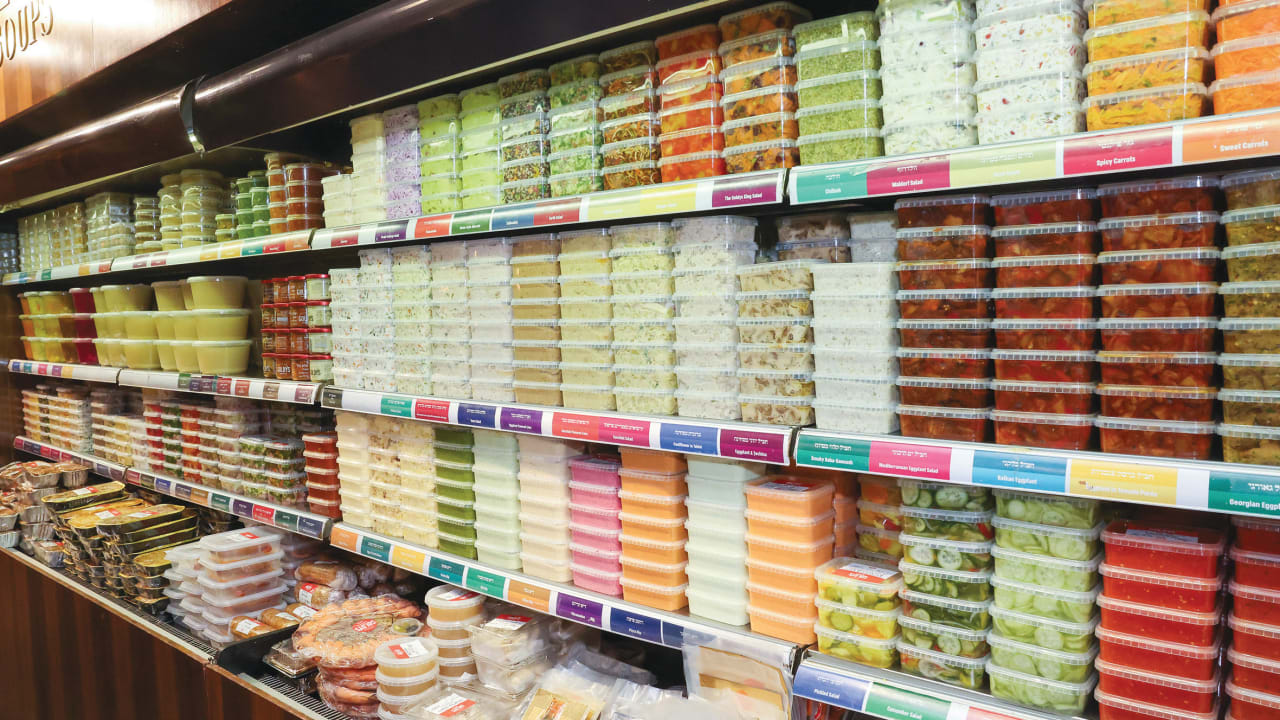
I entered a large, spacious store, decorated in muted shades of brown, with separate stations highlighting a wide variety of foods – pies, soups, desserts, wines, salads, main dishes, and baked goods.
Established in 1982 by Moshe Goldys some 45 years ago in the haredi neighborhood of Ezrat Torah in northern Jerusalem, the eponymous deli, in the words of its founder, combines nostalgia and innovation to create new and noteworthy varieties of classic Jewish foods.
Tall and powerfully built, with white sidelocks, a full white beard, and friendly blue-gray eyes, the 68-year-old Goldys is the face of the operation, which includes the main store in Jerusalem, a branch in Bnei Brak, and an impressive online operation that delivers throughout the country.
A Boyaner Hassid, Goldys grew up in Tiberias and moved to Jerusalem in 1970 after his bar mitzvah. He studied in yeshivot until he was 20, married, and remained in Jerusalem.

Goldys bears an uncanny resemblance, both in demeanor and appearance, to a department store Santa, which aligns with his earlier career as a successful teacher in a local Jerusalem heder.
“I had a great imagination,” he recalls with a smile. “When we studied the Torah portion of ‘Balak’ [which relates the story of Balaam and his donkey], I brought a donkey into the classroom.” Goldys recounts how, while reenacting the story of Moses turning his staff into a snake before Pharaoh, he hid a plastic snake in his shirt sleeve and, while the students weren’t looking, “transformed” the stick he was holding into a snake in front of the amazed children. A former student of Goldys arrives at the store during our interview and confirms the positive effect he had on his students.
After seven years of teaching in the heder, Goldys decided to embark on a new career. Grinning, he says, “I felt that if I stayed another year, I myself would turn into a child.” On his way to work, Goldys frequently passed a small dining hall on Ezrat Torah Street, and, allured by the aroma of the food, decided to enter the culinary industry. When asked if he had prior experience, he says, “I just decided to do it. Whatever I did, I did well. I learned everything on my own.”
Goldys refurbished the store, worked long hours daily, and turned it into a multifaceted business. The Jerusalem location sells takeout and has a small seating area for walk-ins. In addition, Goldy’s Jerusalem has two adjacent simcha halls: one that seats 600 people, and a smaller venue that accommodates 200 guests. The deli also offers takeaway catering services for home or hall events.
A second, larger location in Bnei Brak is a dairy café that seats 100 diners. The staff of chefs prepares the food at its kitchens in Mishor Adumim, which is delivered to the Goldy’s locations.
While most of the walk-in traffic in Jerusalem comes from the surrounding haredi neighborhoods, Goldys says the Bnei Brak location attracts many clients from Herzliya and Shefayim. The Goldy’s branch there provides food to many of the hi-tech firms in the area. “Goldy’s is the only place,” says the owner, “where secular Jews can smile at me, and I can smile back at them in return.” At least half of the online shopping site’s clientele, he adds, are secular.
Mutual respect between haredim, secular society
Growing up in Tiberias, says Goldys, he experienced mutual respect between the haredim and secular elements of the population – something that is sadly missing these days. “In the past, when I would walk on Shabbat with my father and neighbors passed by in a car, they would feel embarrassed and try to hide the fact that they were driving. And the reverse was also true – the haredim showed great respect toward the secular community.”
Goldy’s operates today with the aim of rekindling that spirit. Perhaps the best indicator of this type of cooperation is exemplified by the deli’s executive chef, Avi Dan, a secular Jew who lives in Ramle. The 44-year-old Dan has been working in and around kitchens for 30 years and has been affiliated with Goldys for the past four years. Goldys and Dan met while working on a joint project several years ago.
The fact that the haredi Goldys and the secular Dan can work together seamlessly is what makes the business special, says Dan. “We have a partnership that is closely intertwined.”
Expanding on the theme of how the deli combines tradition and innovation, Dan says, “We have been developing culinary innovation with traditional, nostalgic dishes.” Goldy’s takes traditional fare, such as challah, chopped liver, and eggplant salad, and expands on them. “We have created 18 different kinds of challah,” says Dan – chili challah, pesto challah, Mahaneh Yehuda challah, and more. We have five or six flavors of chopped liver and 17 types of eggplant salad.”
Goldys adds enthusiastically, “We have everything that anyone could want – even Georgian food. We have eight varieties of schug, and eight kinds of gefilte fish.”
The most popular dishes sold at Goldy’s during the year include classics such as gefilte fish, chicken soup, chopped liver, and potato kugel. Those with a more Sephardi bent prefer the Moroccan fish and kubbeh soup.
Dan points out that the deli’s tradition of giving back to the community has made him appreciate his association with his employer. Goldy’s has donated more than NIS 2 million since Oct. 7 and will provide Passover meals to the widows of IDF soldiers. The deli donated food to the families of the captives in Gaza until their relatives returned, and distributed mishloah manot (gifts of food) for Purim to families of IDF reservists. “This year,” says Goldys, “we distributed some 250,000 sufganiot for Hanukkah in the Gaza border communities.”
The ultimate expression of giving to the community can be found in Moshe Goldys himself, who has served in the IDF for more than 40 years and has extended his service until 2028. He is not afraid when he hears the sirens signaling the approach of incoming missiles.
“I was involved in many wars and operations, and served at the front, and fear doesn’t speak to me,” he says.
With Passover less than two weeks away, Goldy’s chefs are working at full speed in the firm’s kosher-for-Passover kitchen in Mishor Adumim (Goldy’s is under Badatz supervision), preparing hundreds of dishes – such as salads, appetizers, main dishes, soups, kugels, side dishes, pastries, and desserts – that will be delivered to thousands of customers throughout Israel.
What are the most popular Goldy’s dishes for Passover? “Kubbeh,” exults Goldys. Chef Dan explains that making a kosher-for-Passover version of kubbeh, which is traditionally made from wheat, is quite an accomplishment. Goldys continues, saying that if I were to taste their matzah balls (kneidlach), I would not believe they were really kosher for Passover.
Sad to say, I was unable to confirm his claim regarding the matzah balls and the rest of Goldy’s kosher-for-Passover food during my visit, as the deli was still selling its regular hametz (non-Passover) fare. I can report, however, that its rogelach – small, crescent-shaped dough filled with chocolate – were among the best I have ever tasted. I also sampled ma’amoul, a delicious pastry filled with halva.
A more extensive review of the food would undoubtedly require a deeper investigation, which I am fully prepared to undertake in the interest of journalistic integrity.
There are many delis like Goldy’s in Israel, I point out to Goldys as our interview comes to an end. What makes Goldy’s different than the others?
“What makes us special,” he replies, “is our innovation. But even with our innovations, our food still retains the authentic flavor that people remember from their grandmother’s home.
“And most important of all is the kindness and friendliness. The food comes with a smile, so that you feel at home. We are a house of joy.”