Live Updates: Liberman rejects possibility of sitting with Arab parties, bloc leaders hold coalition talks
Netanyahu meets Ben-Gvir, Smotrich as opposition leaders hold coalition talks • Shas's Deri rules out joining opposition bloc government without Likud as UTJ weighs talks
PM's son Yair Netanyahu deems Israeli Arabs 'greatest danger' to Israel besides Iran
The Prime Minister's son, Yair Netanyahu, claimed Israel "cannot survive long-term when 20% of its population identifies with its enemies and wants its destruction."
ByAVI SOLOMONYair Netanyahu, son of Israeli Prime Minister Benjamin Netanyahu, arrives for a court hearing on his request for a restraining order against Haaretz journalist Uri Misgav at the Jerusalem Magistrate’s Court in Jerusalem, July 15, 2026.(photo credit: CHAIM GOLDBERG/FLASH90)Go to the full article > >
Israel's opposition must break its promise, rely on Arab parties to oust Netanyahu - opinion
The opposition should stop overthinking, get out of its own way, thank the Arabs for their support, and get on with saving the country.
ByDAN PERRYRa'am head Mansour Abbas stands alongside fellow party member Yoav Segalovitz in the northern Israeli city of Sakhnin, on Israel’s general election night, October 27, 2026(photo credit: MICHAEL GILADI/FLASH90)Go to the full article > >
'We will not sit with supporters of terror': Liberman says no to coalition with Arab parties
Middle Israel: Netanyahu and Eisenkot both lost, but Israel may have emerged the winner
The opposition had every reason to win by a landslide, but Eisenkot offered no vision beyond replacing a failed government.
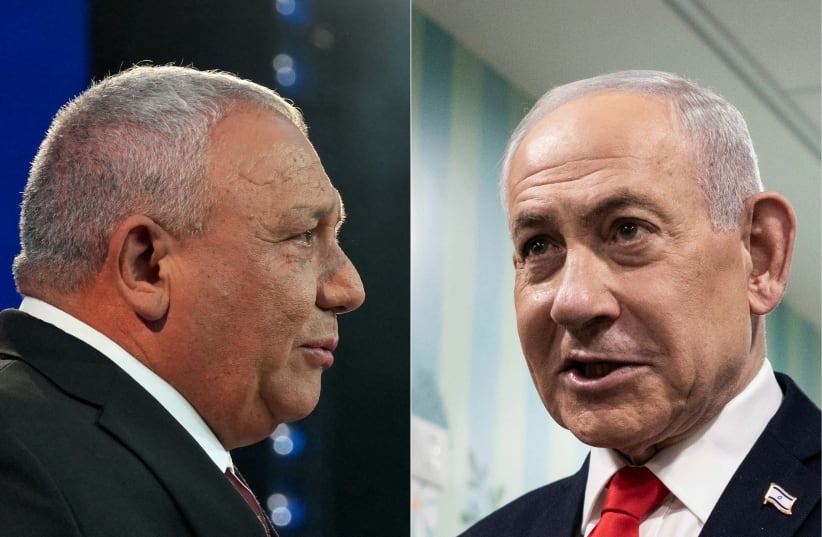
ByAMOTZ ASA-EL(L-R): Yashar head Gadi Eisenkot, Prime Minister Benjamin Netanyahu(photo credit: MAYA LEVIN, JEWEL SAMAD/various sources/AFP via Getty Images)Go to the full article > >
Israel cannot afford another election - its leaders must compromise for unity - opinion
What matters is who can assemble 61 seats and turn them into a functioning coalition. Neither side can do that right now, but Netanyahu appears to be in the stronger position.
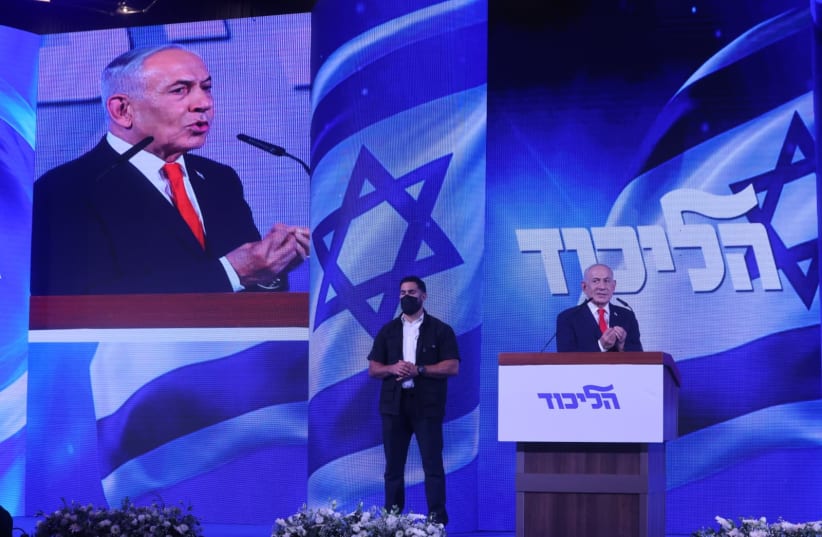
ByYAAKOV KATZPrime Minister Benjamin Netanyahu speaks at Likud headquarters following the release of exit polls.(photo credit: MARC ISRAEL SELLEM/THE JERUSALEM POST)Go to the full article > >
Netanyahu meets Ben-Gvir, Smotrich as opposition leaders hold coalition talks
Netanyahu met Ben-Gvir and Smotrich as opposition leaders held separate talks
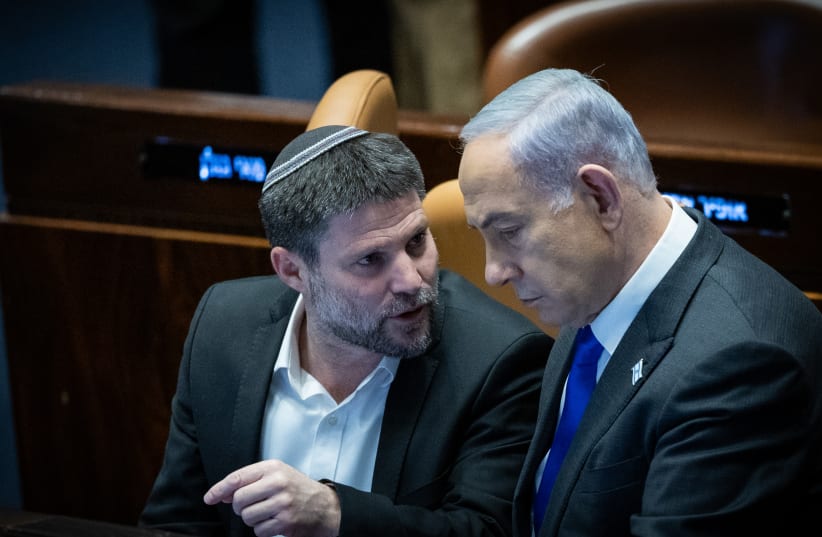
ByANNA BARSKY, NAHUM PERRYPrime Minister Benjamin Netanyahu and Finance Minister Bezalel Smotrich attending the Knesset, February 7, 2024; illustrative.(photo credit: YONATAN SINDEL/FLASH90)Go to the full article > >
Shas's Deri rules out joining opposition bloc government without Likud as UTJ weighs talks
"We are not in anyone's bloc," Maran Rosh Yeshiva Rabbi Dov Landau said.
Netanyahu's chief of staff provided intel. leading to arrests in Ra'am vote bribery case - report
Senior officials told N12 that the election bribery case is unlikely to result in an indictment and that the suspects have explained the source of the money.
ByJERUSALEM POST STAFF Prime Minister Benjamin Netanyahu's Chief of Staff, Ido Norden.(photo credit: SECTION 27A COPYRIGHT ACT)Go to the full article > >Israel votes 2026: All you need to know
The final voter turnout was 77.7% when polls closed at 10:00 p.m., according to the Central Elections Committee (CEC), up 7.1% from the 2022 election.
Likud remains the largest party: Netanyahu's Likud won 27 seats, followed by Eisenkot's Yashar with 21 and Naftali Bennett's B'Yachad with 12.
Netanyahu's bloc leads, but falls short of a majority: Prime Minister Benjamin Netanyahu's bloc is set to hold 53 seats in the 120-member Knesset, while the opposition bloc led by Gadi Eisenkot is set to hold 48 seats.
Arab parties hold 19 seats: The Joint List and Ra'am secured a combined 19 seats, giving them a potentially decisive role in efforts to form the next government.
What happens next? Once the official results are published, President Isaac Herzog will consult with representatives of the elected parties before tasking a lawmaker with forming the next government. The designated candidate will initially have 28 days, with a possible 14-day extension, to form a coalition.
Could Israel face another election? If no candidate succeeds in forming a government through the prescribed process, the political deadlock could ultimately lead to another election.