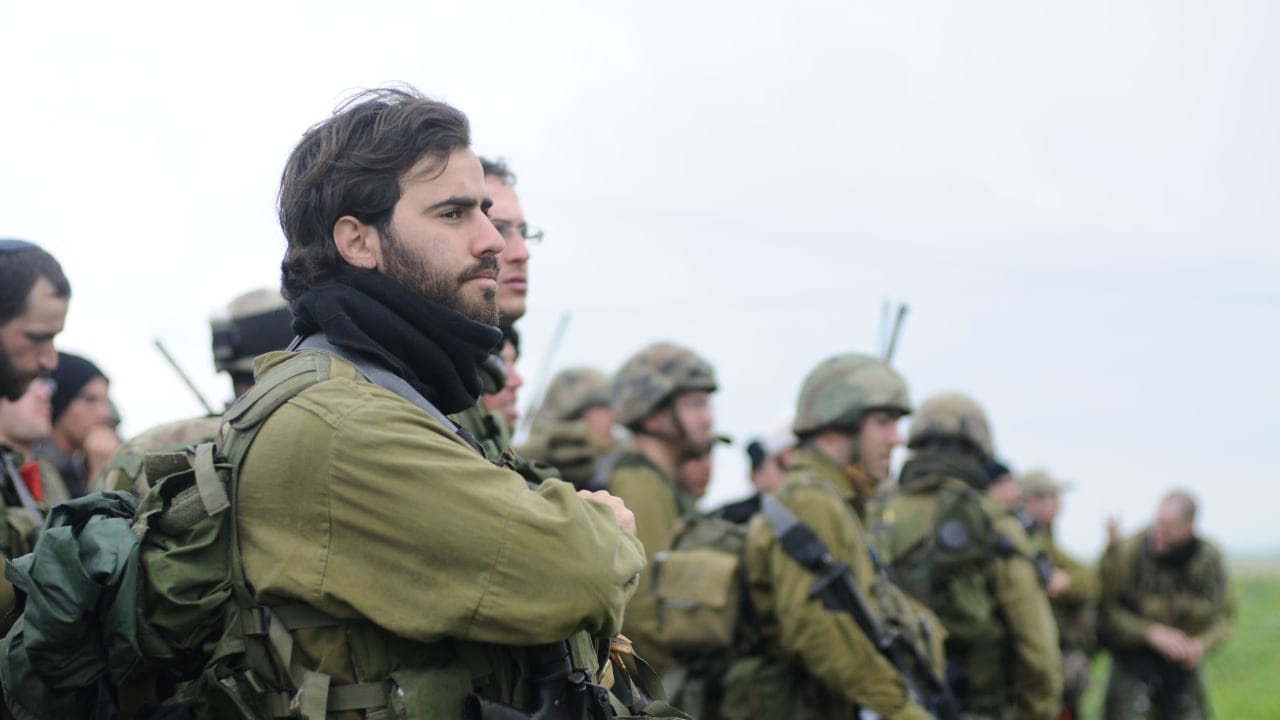
The IDF on Monday tried to douse a fire and, in some cases, a near-rebellion by reservists against changes it has made to the terms of their service as part of pressure and a broader budget deal from and with the government.
Broadly speaking, the changes surround the agreement between the military and the Finance Ministry to reduce the number of standing reservists on duty on any given day from 60,000 to 40,000 as part of cutting back the standing army in the post-war era.
According to the IDF, reducing the number of reservists called up by 10,000 per day saves NIS 3.5 billion.
There was heavy pressure from the government and the ministry on the military to find some significant post-war savings in 2026, given the heavy deficit that extraordinary defense spending and harm to the economy caused in 2023-2025 and given major new spending in other areas, such as independent production of munitions, as part of the lessons of the war.
One of the unspoken points of anger in the debate is that reservists could serve even fewer days if the government had not consciously avoided putting pressure on the haredi (ultra-Orthodox) community for two years to boost its extremely low recruitment rate.

Between 8,000 and 10,000 haredi men are still avoiding the draft on a yearly basis, and the government’s only efforts right now to address the issue are mostly viewed as broadening haredi exemptions from service rather than any real attempt to rein in the exemptions.
IDF struggles to contain reservist anger over duty changes
As part of cuts to the number of reservists serving per day, the IDF and the government reduced standard reserve duty in 2026 from 72 days to 55 days, and in some areas to 45 days.
While fewer days of duty per soldier can be seen as a positive, and while a change in policy and law has allowed reservists to receive a special additional financial boost for serving only 45 days, rather than the prior minimum “floor” of 60 days, other benefits for soldiers have been reduced.
For example, the 45 days of reservist service will now include 42 days of full service, three days to train, three paid-off days to readjust to civilian life, and one to three calmer transition days for returning to military readiness.
Prior to the changes, soldiers received nine days to readjust to civilian life, plus an additional one to two days they could use to relax or transition.
Losing these days has reservists up in arms, especially after two years of unprecedented long service periods, where many soldiers lost their civilian jobs, fell behind in university classes, and found their marriages broken and ending in divorce.
In addition, many reservists are up in arms that the IDF wants to change the model of their service for each two-week period from one week as soldiers and one week as civilians to 10 days as soldiers and four days as civilians.
Although in a mathematical sense, the number of days the soldiers would serve would be identical, sociologically and professionally, it is much easier to slide in and out of family and work situations with a standard, predictable full week on, full week off schedule than it is with an erratic 10 days and four days schedule, which cuts randomly into the middle of the week and the weekends.
Next, reservists criticized the rollout, saying it occurred without dialogue with them and their commanders about their practical needs.
The IDF's response to the problem
Responding to these issues, IDF sources admitted that the transition to a post-war era will be difficult.
However, the military said it could not justify a large standing reserve army post-war and needed to find savings, under pressure from the government.
In addition, there are many parts of the IDF that military sources say are no longer necessary in peacetime, such as large Home Front Command units, large headquarters and regional command center staff units, and others.
Moreover, IDF sources said that some reservists were so enthusiastic about the army that they quit their jobs and tried to make it their permanent career, even though they had not been offered a career track.
The military said this phenomenon must be curbed so that the wider society recognizes that most reservists must continue working their primary jobs and that the vast majority will not be offered new career tracks in the IDF as a result of their wartime service.
Regarding the reduced number of personal and transition days, the military rejected reports that this meant cutting back mental health support.
Also, the IDF said that fewer such transition days are necessary for soldiers when they are not actively fighting as much as they were at the height of the war.
The military’s position regarding the week-on, week-off issue was less coherent.
On the one hand, the military said it recognized the culture that has built up over the last two years, with a week on and a week off, to sustain longer periods of service.
On top of that, IDF sources openly said that for some indefinite period, they would look the other way regarding this phenomenon.
On the other hand, the military said it was important to begin the process of returning to a more standard operating model.
IDF sources said that even if it might take months or longer to return to a 10-day, four-day rotation for reservists, it was important to begin shifting the country's mentality back to this model of service.
According to IDF sources, the 10-day, four-day service model is far superior from a professional military perspective, enabling commanders and soldiers to better know each other’s abilities, needs, and character as a team.
Another criticism of this process is that suddenly large portions, some say up to 50%, of IDF guards stationed at southern villages near Gaza disappeared over the last week.
Critics say that this has harmed the feeling of security of Israelis living near Gaza, who had become accustomed to a larger military presence after October 7.
IDF sources said that the number of soldiers on the Gaza border is five to six times what it was before October 7 and that they could not heal all subjective feelings of insecurity.
Despite the statement of a larger force, some of the numbers cited by military sources appeared to represent only a small overall increase over the full Gaza border defense of 1,200 soldiers prior to October 7 (though on October 7, only 600 were on duty due to the Jewish holiday).
When asked to clarify the discrepancies in the number, the IDF had not responded by press time.