
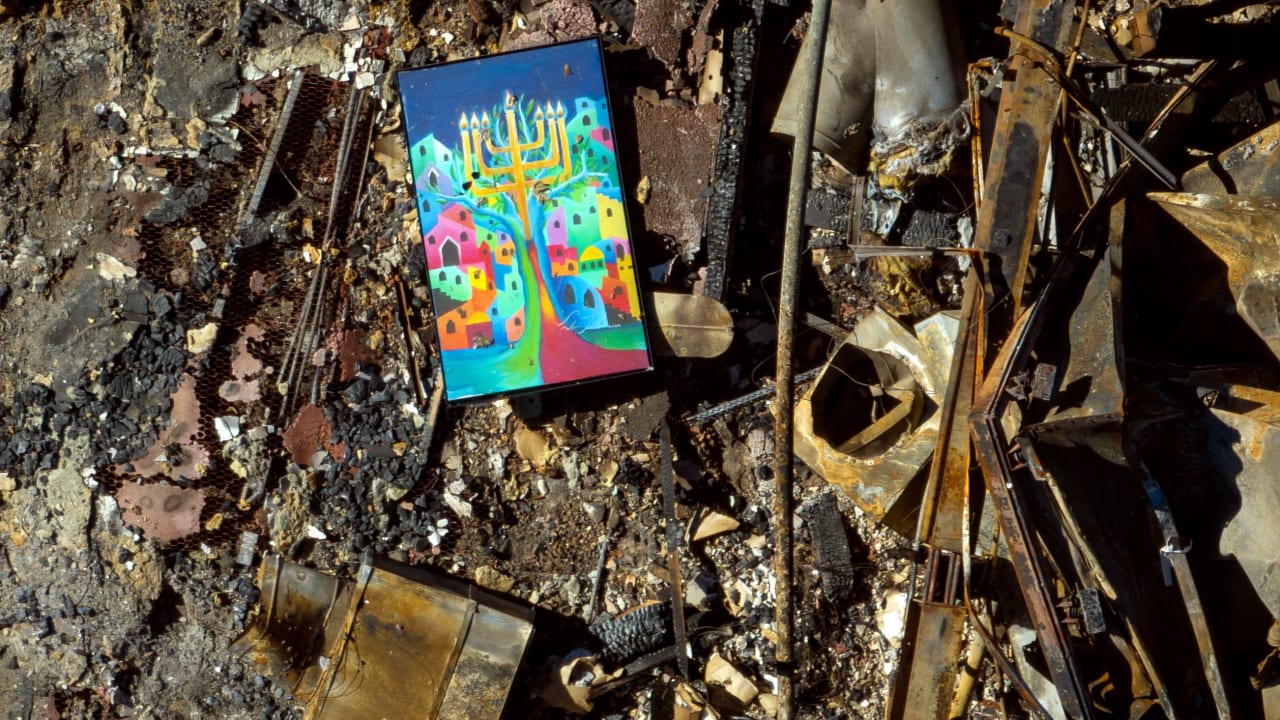

The relationship between the Jewish state and Jewish communities around the world has never been static, but rarely has it been tested as profoundly as it has over the past two and a half years of war. Tragic events have reshaped assumptions, strained old frameworks, and drawn Israel and the Diaspora closer even as fault lines have deepened.
Still, many challenges remain. These stem in part from political shifts inside Israel, where public opinion has hardened since Hamas’s brutal October 7 attack. Worldwide, Jewish communities are also changing, not only due to rising antisemitism but because an increasing number of governments are now fiercely critical of Israel and its actions in Gaza.
This edition of The Jerusalem Report explores these issues. What has changed over the past two years? Where do we stand today, and where are we headed? How can we strengthen ties and remain a cohesive people even as the challenges faced by each community grow more distinct?
Included in these pages are powerful insights from contributors from around the Jewish world: William Daroff, CEO of the Conference of Presidents of Major American Jewish Organizations; Noah Shack, CEO of the Centre for Israel and Jewish Affairs in Canada; Michael Wegier, chief executive of the Board of Deputies of British Jews; Robert Ejnes, executive director of the Council of French Jewish Institutions; and Mauro Berenstein, president of DAIA (Delegación de Asociaciones Israelitas Argentinas).
Shirel Dagan-Levy, CEO of Voice of the People, which was established by President Isaac Herzog to foster dialogue between Israel and Diaspora communities, highlights how the past two years have tested this important relationship.
The Jerusalem Post’s Editor-in-Chief, Zvika Klein, draws on his years covering the Jewish world to explore how Chabad should be a model for Jewish communities everywhere and Kenneth Jacobson, deputy national director of the Anti-Defamation League, examines the role Israel can play in combating the surge in antisemitism worldwide.
In addition, David Harris, executive vice chair of the Institute for the Study of Global Antisemitism and Policy (ISGAP), asks what Jewish organizations must confront as Zohran Mamdani begins his term as mayor of America’s most Jewish city, New York. Rina Edelstein, VP of Advancement at Orr Shalom, explores the changes in Jewish philanthropy since October 7.
Newly-elected President of the World Zionist Organization Rabbi Doron Perez offers an optimistic look at how tragedy can serve as a catalyst for opportunity and positive change. Israel’s former minister of Diaspora Affairs Nachman Shai, now dean of Hebrew Union College, argues that despite recent rhetoric, Israel will continue to need US military aid, while Eran Lerman, vice president of the Jerusalem Institute for Strategy and Security, contends that the Israel-US relationship does requires some reassessment.
On the feature front, our cover story by The Jerusalem Post’s Diaspora correspondent Mathilda Heller discusses the impact of doxing on Israeli soldiers. Rachel Fink examines efforts to encourage Diaspora Jews to make aliyah. And veteran Jerusalem Post reporter Greer Fay Cashman profiles Israel’s head of protocol.
Rounding out the edition, the outgoing dean of the Hebrew University of Jerusalem, Prof. Asher Cohen reflects on the challenges faced by one of Israel’s most prominent academic institutions.
This war has taken a toll on many fronts. Staying ahead of these issues is essential to ensuring that the vital relationship between Israel and the Jewish Diaspora remains strong and intact. Enjoy your reading.
– Ruth Marks Eglash