The United States Department of State called on Americans to immediately depart more than a dozen countries in the Middle East, including Saudi Arabia and the United Arab Emirates, on Monday amid an ongoing escalation in the region.
Mora Namdar, the State Department's assistant secretary for consular affairs, said US citizens should leave using available commercial transportation "due to safety risks."
The warning came after the department, in recent days, updated its travel advisories for several countries in the region to recommend against travel.
Monday's advisory applies to Bahrain, Egypt, Iran, Iraq, Israel, the West Bank and Gaza, Jordan, Kuwait, Lebanon, Oman, Qatar, Saudi Arabia, Syria, the United Arab Emirates, and Yemen.
The State Department said on Tuesday it has ordered the departure of non-emergency US government personnel and family members from Bahrain, Iraq, and Jordan. The order comes as the US monitors security risk linked to its conflict with Iran.
The US State Department has also activated an inter-agency emergency task force to manage the situation and coordinate the United States' response to the conflict, a US official said.
Rubio releases video message: 'Safety and security of US citizens is State Dept's highest priority
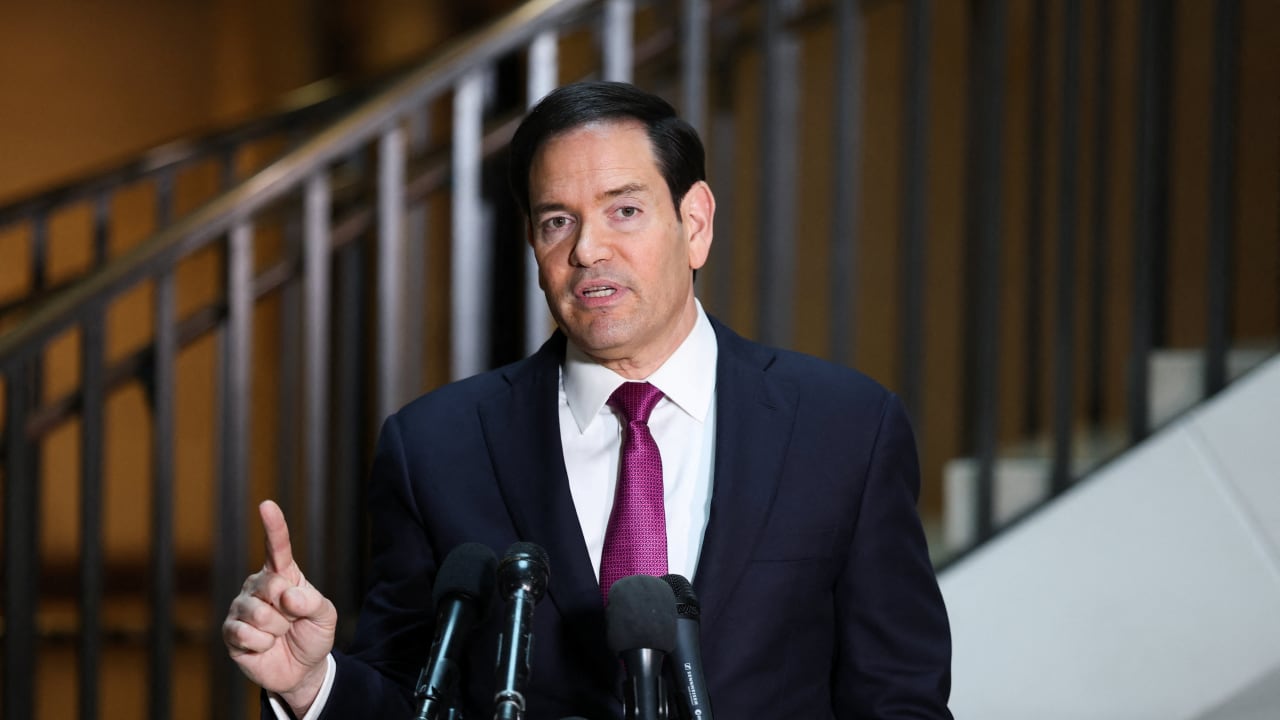
Secretary of State Marco Rubio released a video message on Monday night, saying that the safety and security of US citizens is the State Department's highest priority, with instructions on how to stay up to date with the latest safety and security information.
"At my direction, the department has activated a 24/7 task force that is providing American citizens with up-to-the-minute safety and security information," Rubio said.
In the "wake of Iran's cowardly attacks," Rubio continued, US citizens located abroad, particularly in the Middle East, should enroll in the Smart Traveler Enrollment Program (STEP) in order to receive the latest updates from local US embassies and consulates.
Rubio also encouraged citizens overseas to follow the State Department's social media channels and advised that the department has a 24/7 hotline.
Americans in Iran face possible peril as US-Israeli strikes grow, detainee advocates warn
Iran is detaining at least six US citizens or permanent residents, according to detainee advocates, raising fears they and thousands of Americans believed trapped in the country could be used as bargaining chips in the escalating war with the US and Israel.
The detainees are among what some experts estimate are possibly thousands of dual US-Iranian nationals and green-card holders who have remained in Iran despite repeated US warnings not to travel there because of the threat of being arrested.
"The regime's history of seeking to leverage Americans for political aims is long established," said Ryan Fayhee, a board member of the Foley Foundation advocacy group. "I would have to imagine that any American is potentially at risk."
The United States and Israel launched attacks on Iran early on Saturday that killed supreme leader Ali Khamenei and other officials, triggering retaliatory Iranian attacks across the region and escalating fears that Tehran will seek other ways to hit back at the US.
"There are hundreds, if not thousands, if not more, of dual nationals that are back there that still have familial ties despite the risks," said Kieran Ramsey, a former FBI assistant director now with the Global Reach advocacy group who headed the US hostage recovery unit.
Iran does not recognize dual citizenship, meaning that other governments cannot provide diplomatic protection or consular services to their citizens who also hold Iranian nationality.
A source familiar with the issue said that the US State Department does not know precisely how many Americans are in Iran.
The State Department and the office of the US Special Presidential Envoy for Hostage Affairs did not immediately respond to a request for comment.
"President Trump has been clear that he wants every American wrongfully detained to be returned home safe and sound, and that there will be dire consequences for regimes that treat Americans as political pawns," White House spokesperson Anna Kelly said in an emailed statement.
Iran's mission at the United Nations also did not immediately respond.
US-Israel strikes against Iranian regime
On Saturday, the United States and Israel carried out a barrage of strikes on various targets in Iran, killing many top officials, including Supreme Leader Ayatollah Ali Khamenei. Tehran responded with its own strikes at multiple US and Israeli sites across the region.
US President Donald Trump said on Monday that the conflict had been projected to last four to five weeks but that it could go longer.
The conflict has resulted in a spike in energy prices as Iranian officials threatened to fire on any ship that tries to pass through the Strait of Hormuz, a key shipping route for the world's oil supply.
US Treasury Secretary Scott Bessent and Energy Secretary Chris Wright are expected on Tuesday to announce US steps to mitigate the rising energy prices, according to Washington's top diplomat, Marco Rubio.
"We anticipated this could be an issue, and Secretary Wright and Bessent will begin to roll out those steps, starting tomorrow, to mitigate, to mitigate against the impact that could have," Rubio said ahead of a briefing of congressional leaders about the strikes.