Sometimes, when I pass a lottery booth, I fill out two forms. If the powers that be want me to become rich, that modest investment should be enough for them to make me win.
Meanwhile, people around me submit form after form. Not long ago, I saw an elderly saleslady who works in a modest store, her ankles swollen, spending hundreds of shekels, certain that this time the jackpot would solve all her problems.
A confession: Until the numbers are drawn, I fantasize about how I’ll spend the millions. Beyond gifts and donations, I debate where to buy a vacation home and whom I will allow to use it.
For the price of a cup of coffee, I enjoy a harmless, pleasant dream. But if I start treating the win as a given – go to a real estate agent, choose a property, and put down a deposit – please, have me admitted to a psychiatric ward, or at least appoint a legal guardian for me.
This analogy has stayed with me ever since senior Israelis began openly promoting Donald Trump for president. It’s as though he were the grand prize, compared to Democrats. This includes president Joe Biden, who supported Israel consistently for over 50 years, ever since he entered the Senate in 1973.

Set aside Trump’s decision during his previous term to pull out of the Iran nuclear deal, and its consequences. Ignore his turning a blind eye, some say even offering support, to antisemitic elements among his supporters. Forget his disparaging remarks about American Jews who oppose him. Let us rather focus on recent days.
The average Israeli welcomes any setback to Iran’s ability to harm Israel, and therefore thanks Trump for harnessing American power toward that end. Yet, according to various intelligence assessments, his bombastic claims about the operation’s success seem overstated.
Trump's actions are volatile and unpredictable
Will he work to achieve a long-term agreement that prevents a future Iranian threat? There’s no certainty, no vision, no plan. Only time will tell whether this operation improved Israel’s strategic position – or made it worse.
Remember his promise to end the war in Ukraine within 24 hours; his humiliation of Ukrainian President Volodymyr Zelensky in the Oval Office; his threats against Russian President Vladimir Putin?
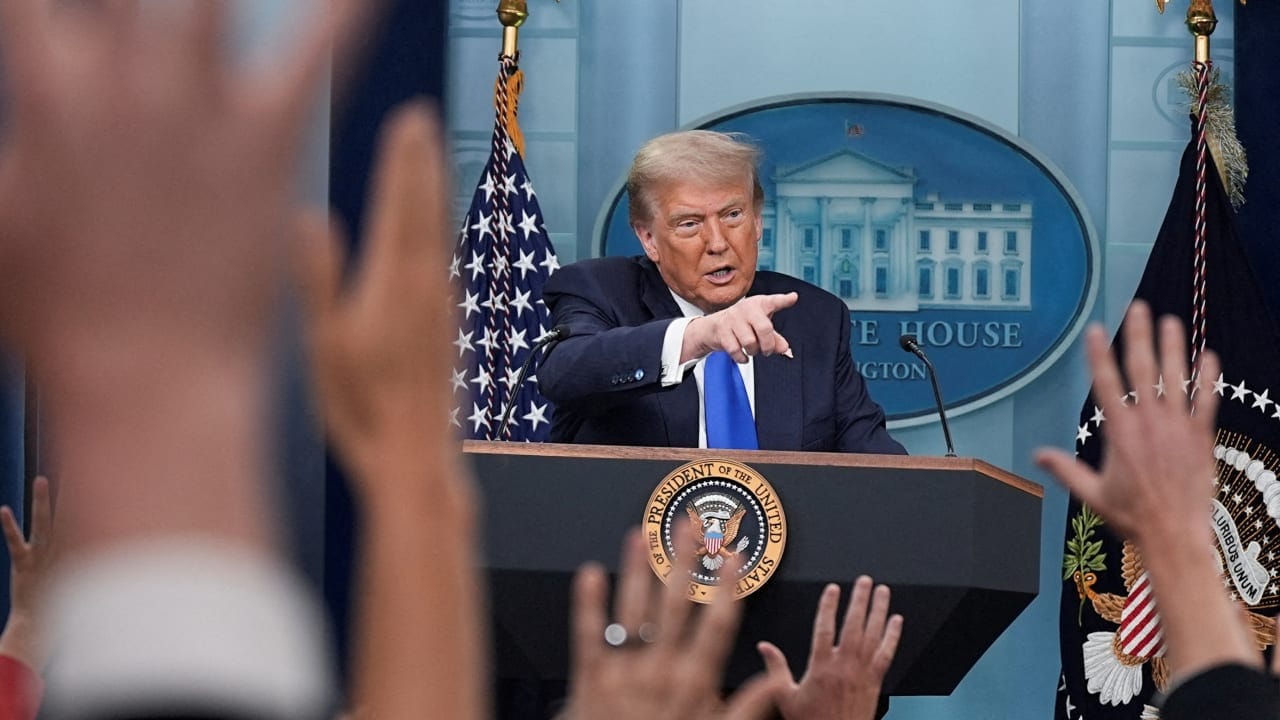
Trump’s attention span is notoriously short, and his targets shift with the wind. Now, just days after the strike on Iranian nuclear facilities, a new “enemy” emerges – Israel’s judicial system. “Netanyahu’s trial must be stopped!” he declares. “Just wait and see what happens to US aid if you don’t!”
Instead of rejecting this blatant interference in the internal affairs of a sovereign nation, local cheerleaders applaud: “Look, even Trump [a convicted felon himself] says the trial is rigged!”
Supporters would do well to pause. This is someone who scraps long-standing policies one day and reinstates them the next; who threatens to leave NATO, then embraces it; who imposes high tariffs and then reverses them. Now he’s threatening Israel over a legal proceeding. How long will it be until he turns on us, when someone whispers in his ear?
Imagine if one of his contacts, say his daughter Tiffany’s Lebanese father-in-law, tells Trump that his business partners in the West Bank are suffering because of checkpoints. Might Trump demand their removal?
What if he decides that universal healthcare, as practiced in Israel, is a waste of money, and unless we abolish it, military aid will be cut? Is that unthinkable? Why? When a Republican senator recently defended cuts to US public health care, she said, “We’re all going to die anyway.” If that’s acceptable there, why not here?
Israel is dependent on the United States and on its president, and we must pay attention to his opinions. Still, those who believe we’ve hit the jackpot – or, like the elderly saleslady, are convinced it’s just around the corner – and raise the stakes with every bet, should remember: yielding to threats does not appease the one making them.
Uncritical, boundless, and self-effacing obedience could leave us all empty-handed.
The writer was Israel’s first ambassador to the Baltic states after the disintegration of the Soviet Union, ambassador to South Africa, and congressional liaison officer at the embassy in Washington. She is a graduate of Israel’s National Defense College.