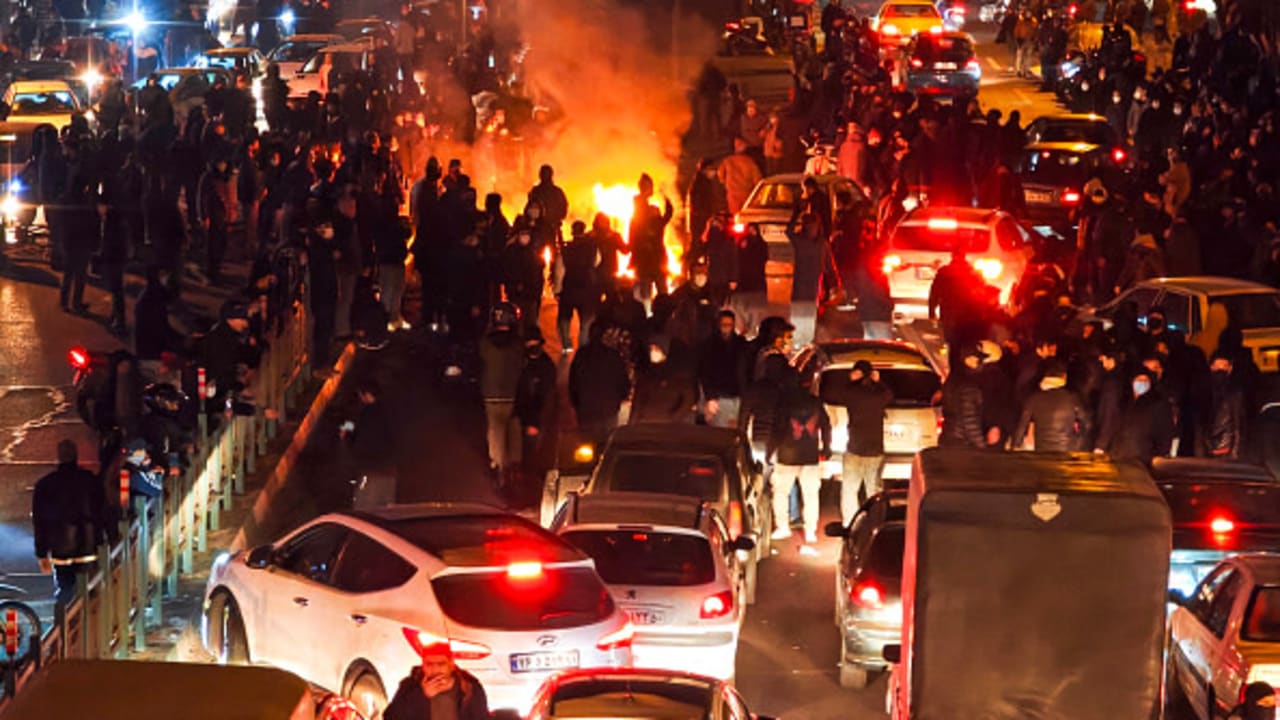
A tipping point has been reached in cities across Iran, as stark images of mass demonstrations – now turning violent – spread. It is a fight for economic freedom and, for many, life itself, as people endure water shortages, inflation continues to skyrocket, food prices soar, and the Iranian rial keeps depreciating.
This is a call for change, with most shouting “freedom!” and with Crown Prince Reza Pahlavi, the son of the late, exiled shah of Iran, emerging as a symbol for many in the streets. How the outcome unfolds depends, in part, on the backbone of world leaders who all too often shy away from the problems of others.
The most disturbing element is the silence from institutions that claim to exist for moments like this. We have seen it before, including during the Israel-Hamas War, when silence should have given way to public condemnation and recognition of the rape of innocent women among its litany of horrors. Although many are criticizing the deafening quiet as Christians are massacred in Nigeria, few would suggest the United Nations has offered an appropriate response there, either.
And now the same pattern is repeating itself with Iran: The United Nations has issued statements of shock and restraint, with Secretary-General António Guterres saying he is “shocked by the reports of violence and excessive use of force by the Iranian authorities” and urging Tehran to exercise “maximum restraint” and “refrain from unnecessary or disproportionate” force.
While such language expresses concern, it stops far short of a call to action. It does not say what should happen to support human rights in Iran, how to protect civilians, how to document abuses, or what consequences should follow if the regime escalates. Those words reflect alarm, not direction, at a moment when direction is exactly what is needed.
Unfortunately, the media is often complicit in this silence.

Where are your voices now?
At the same time, the US Democratic Party’s reaction to the carnage has been markedly muted compared with its vocal responses to other crises. Yes, there have been statements.
House Democratic Leader Hakeem Jeffries declared, “Millions of people across Iran are displaying tremendous bravery in the face of decades of oppression and dictatorial rule. The world is watching in awe as they lead an honorable fight for freedom, dignity, and self-determination. I stand with the courageous protesters who are under attack by the Islamic Republic.” Rep. Alexandria Ocasio-Cortez wrote, “The Iranian government’s violent crackdown on demonstrators is horrific and must stop now.”
But that is precisely the point: The words are broad, clean, and cost-free. They do not spell out what Democrats believe should happen next to support human rights in Iran, pressure the regime, help protesters communicate, or impose consequences that match the scale of the slaughter.
You can speak of genocide in Gaza and hear impassioned calls for justice, but when thousands are being butchered in over 200 cities in Iran, where are your voices now? Where is the urgency, the organizing, the sustained pressure, the clear moral language that insists the Iranian people have rights that must be defended? In a moment like this, silence is not neutrality; it is abandonment.
As Iranians suffer at the hands of the ayatollahs – and are killed for life’s basic rights – the organization whose existence is supposed to embody humanity shuts down.
Global crisis
What is happening inside Iran is not only a domestic crisis. It is a global one. The Islamic Republic has held the world hostage through its nuclear aspirations and through the use of proxy terror armies, including the Houthis, whose attacks have threatened international shipping along vital maritime routes, particularly in the Red Sea and Gulf of Aden.
Given that reality, it is difficult to understand why the very countries most directly affected by the ayatollahs’ ambitions do not see this moment as a window – perhaps the best in years – to empower the only people who can, in fact, turn Iran around and potentially bring about regime change.
Where are the Arab countries? Where is Europe?
Russia is unlikely to take a meaningful stand. Vladimir Putin is embroiled in his own war with Ukraine and will not jeopardize his alignment with Tehran. China, as the largest purchaser of sanctioned Iranian oil, has built its own interests around the regime’s survival. As Iran’s key backer, Beijing will not be serving the people of Iran anytime soon.
America and Israel, by contrast, have publicly taken a stand behind the Iranian people.
US President Donald Trump has warned Iran that Washington will intervene if “protesters are touched.” Looking through a social media lens, the Foreign Ministry has been telling the people of Iran that Israel stands with them. Governments can ensure the demonstrators have the tools they need to strengthen their protests. Enabling virtual private networks so people can communicate, organize, and tell the truth to the world is essential.
The US is also gravely concerned that Israel remains in Tehran’s crosshairs as Iran grows its ballistic missile program and continues to invest in military capabilities that threaten the region.
Their struggle is our struggle
Yet for all the regime’s years of investment in nuclear facilities and weapons-manufacturing plants – while casting its web through proxies across the Middle East – the neglect of its own resources may become its worst nightmare. Mismanagement and a lack of oversight on water could become a crisis that the regime cannot contain.
This is not the first demonstration, but this time, traction is evident, and the plea must be for the world to step in. Months ago, I warned in an opinion piece titled “Did Mahsa Amini die in vain?” that the failure to confront the Islamic Republic after her death would only deepen Iran’s crisis and embolden further repression.
What is unfolding now is the answer to that question. The people on the streets today, bravely fighting for life and basic dignity, are carrying the consequences of global hesitation. Their struggle is our struggle, and the least we can do is be vocal.
For decades, Iranians have pressed for outside assistance to place pressure on the government and the Islamic Revolutionary Guard Corps so they can bring about the freedoms they desire: a stabilized country, an end to economic mismanagement, and the overthrow of the repressive Islamic Republic – one that has been swimming in political corruption and human rights abuses.
The opportunity for Iranians to seize this moment has never been stronger. The time is here for leaders who care about humanity to recognize this historic turning point and to shield the Iranian people from tyranny. The future of Iran is in all our hands.
The writer is president and CEO of The Media Line news agency and founder of the Press and Policy Student Program, the Mideast Press Club, and the Women’s Empowerment Program. She can be reached at ffriedson@themedialine.org.