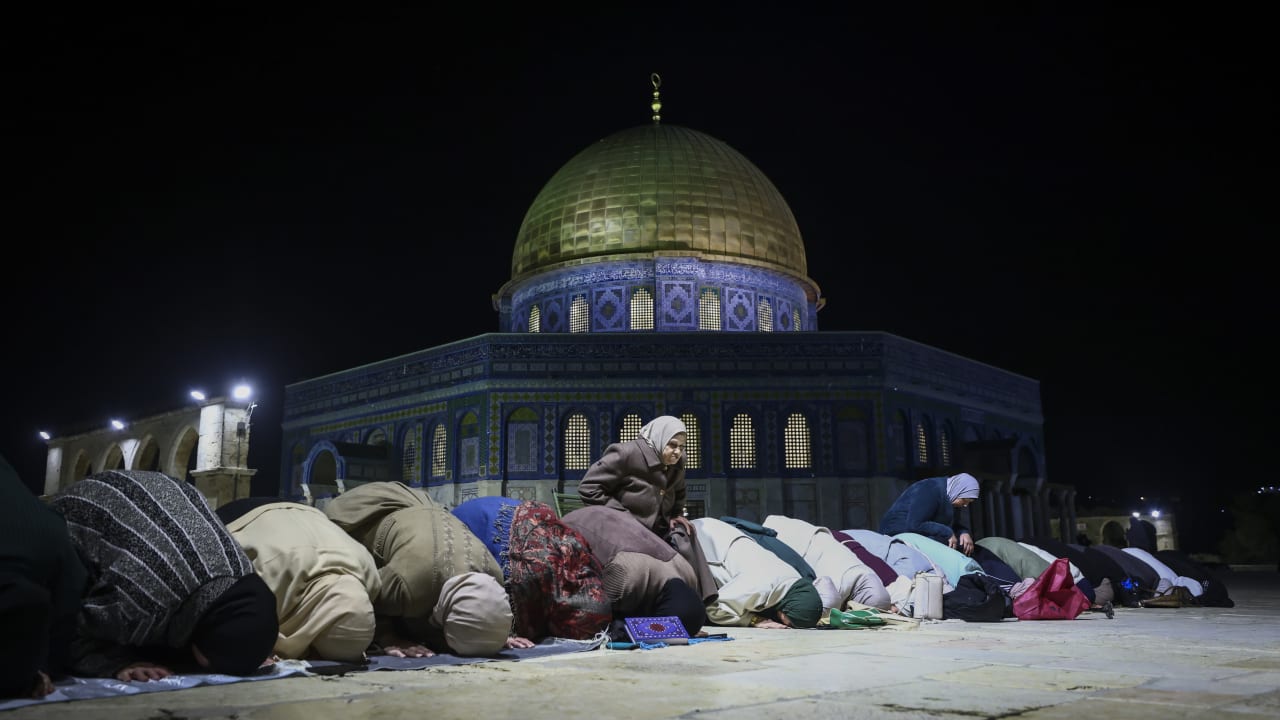
Rabbi Mendy Chitrik’s reflections on the quiet acts of Muslim neighbors who once helped Jewish families observe Shabbat deserve not only appreciation but response. His words recall a moral memory that is neither sentimental nor naïve. It is real. It belongs to our shared past, and, if we are courageous, it may yet belong to our shared future.
The image of Muslim families lighting stoves or switching on lamps for their Jewish neighbors is not extraordinary diplomacy. It is ordinary decency. It echoes the Quranic teaching that righteousness is found not in outward forms alone but in faith in God expressed through care for neighbor and stranger alike. Before we were divided by politics, we were bound by proximity. Before suspicion hardened our hearts, familiarity softened them.
This year, as Ramadan and the Hebrew month of Adar move in parallel, the symbolism is profound. In Ramadan, Muslims fast to purify the soul and renew consciousness of God. In Purim, Jews celebrate survival and courage, affirming that despair does not have the final word. Fasting and feasting, restraint and joy, together form a spiritual grammar shared by our two traditions. Both remind us that darkness in history can be met with faith, generosity, and resilience.
Jews in the Middle East
Jews have been part of the Middle Eastern landscape since antiquity. The Quran speaks of the Children of Israel with reverence, recounting their trials and their prophetic legacy. The Prophet Muhammad, peace be upon him, entered into covenants with Jewish tribes in Medina, recognizing them as part of a shared civic community. These precedents are not peripheral; they are foundational for any serious Muslim reflection on Jewish-Muslim relations.
History, however, demands honesty. There were centuries of coexistence and intellectual exchange in lands under Muslim rule. Jewish philosophers wrote in Arabic; Muslim jurists engaged Jewish scholarship; commerce and poetry crossed communal lines. Yet there were also moments of discrimination and tension, as in every civilization. No community’s history is without blemish. Maturity requires us to resist both romantic nostalgia and corrosive cynicism.

The tragedies of the modern era – from the Holocaust to the ongoing anguish of Palestinians, have profoundly reshaped Jewish-Muslim relations. The war in Gaza has deepened grief and fear across communities. Every innocent life lost diminishes us all. Every child buried, Jewish or Palestinian, wounds the conscience of humanity.
Yet grief must not become hatred. Pain must not calcify into permanent estrangement.
As Muslims, we must say clearly: Antisemitism is a moral and theological corruption. It contradicts the Quranic affirmation of human dignity and the prophetic model of covenantal responsibility. To hold Jews collectively responsible for political conflicts is unjust and contrary to Islam.
At the same time, moral integrity requires that we acknowledge the legitimate rights and suffering of Palestinians. Compassion cannot be selective. Security for one people cannot rest upon the humiliation of another. Justice is not a zero-sum equation.
Approximately 100,000 Jews continue to live across Muslim-majority countries. Their presence is not a relic; it is a living trust. Their safety and flourishing must remain a Muslim responsibility grounded in principle, not expediency.
Rebuilding trust between Jews and Muslims
Trust will not be rebuilt through statements alone. It must be renewed in neighborhoods, schools, and houses of worship. It grows when Muslim imams and Jewish rabbis stand together, not to erase differences but to affirm shared accountability before God. It deepens when Muslim youth learn Jewish history with nuance, and Jewish youth encounter Islam beyond stereotype. It matures when each community defends the other’s right to worship freely, even in moments of political tension.
We must move from coexistence to co-responsibility.
The Quran teaches that God created us into nations and tribes so that we may know one another. The Hebrew Bible commands, “Justice, justice shall you pursue.” These are not competing calls. They converge. To know one another truthfully is to pursue justice responsibly.
Authentic dialogue does not eliminate disagreement. Nor should it. It does, however, insist that disagreement never nullifies dignity.
If Muslim and Jewish leaders speak honestly, naming pain without weaponizing it, acknowledging wrongs without defensiveness, affirming rights without negating the other, then a new chapter is possible. Not a return to an imagined golden age, but a sober, humble renewal rooted in shared moral courage.
For the sake of our children, Muslim, Jewish, Christian, and others, we must choose the harder path: truth without hatred, solidarity without erasure, faith without fanaticism.
May the One God, whom we both worship, guide us toward reconciliation. May He soften our hearts and make us worthy heirs of the prophets we revere.
The writer is the grand mufti of Bosnia.