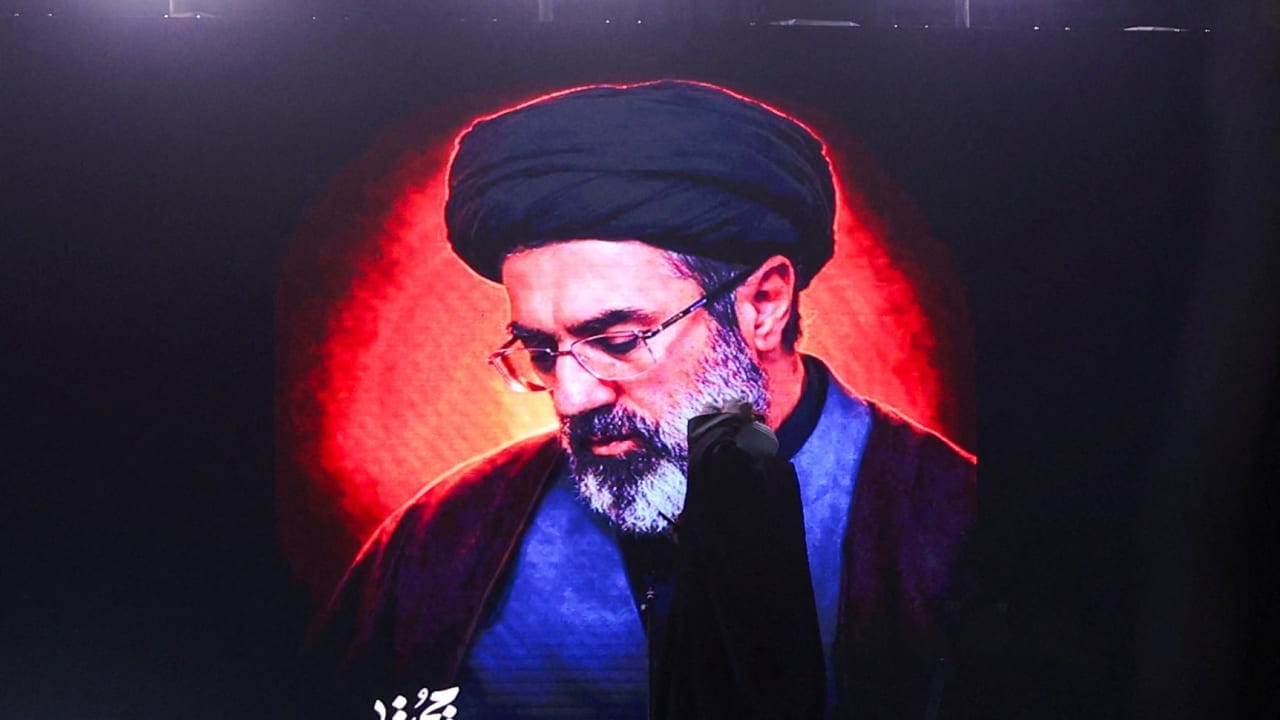
On March 8, Mojtaba Khamenei, the son of Ali Khamenei who was killed in a targeted strike on February 28, was announced as Iran’s new supreme leader. The speculation is that he may have been so wounded in that strike that he has not been seen in public from that day to this. His first address to the people was read for him by a TV news anchor.
If US President Donald Trump had been hoping that Iran’s new leader would be open to negotiate a better future for his country’s people, he has been sadly disappointed. Mojtaba Khamenei is very much his father’s son. He is generally viewed as hardline and anti-West politically, and strongly aligned with the IRGC (Islamic Revolutionary Guard Corps) militarily.
In short, the regime’s elite have done their best to reconstitute themselves and proceed on their quest to achieve the basic purposes of the Islamic revolution that, half a century ago, swept away Iran’s Pahlavi dynasty. Ever since, most world leaders have been unable, or perhaps unwilling, to acknowledge the underlying motivation of its instigator, Ayatollah Ruhollah Khomeini. They have also refused to accept that the same objectives have driven the regime ever since.
In his writings before the revolution, and in his speeches after, Khomeini affirmed repeatedly that the foundation stone of his philosophy was to impose Shiite Islam on the whole world by destroying Western-style democracy and its way of life. To achieve this aim, he identified Israel and the United States (and also, at one time, Soviet Russia) as his prime targets.
“We wish to cause the corrupt roots of Zionism, Capitalism, and Communism to wither throughout the world,” said Khomeini. “We wish, as does God almighty, to destroy the systems which are based on these three foundations, and to promote the Islamic order of the Prophet.”

By this he meant his strict Shi’ite interpretation of Islam, for elsewhere he had declared that the holy city of Mecca, situated in the heart of Sunni Saudi Arabia, was in the hands of “a band of heretics.”
Ever since 1979, the world could have recognized, if it had a mind to, that the Iranian regime has been engaged in a focused pursuit of these related objectives – the destruction of democracy and the global imposition of Shi’ite Islam – quite impervious to any other considerations. Instead, wishful thinking has governed the approach to Iran of many of the world’s leaders.
The administration of then US president Joe Biden maintained the tradition, inherited from his years as vice president to Barack Obama, of seeking an accommodation with the regime. A clear-eyed look at the facts would have shown that the Iranian regime did not intend to become one of the comity of civilized nations. To do so would have negated the revolution’s fundamental purposes, to which the ayatollahs remained unshakably committed.
'We shall export our revolution to the whole world'
In the words of Khomeini, the founder: “We shall export our revolution to the whole world. Until the cry ‘There is no God but Allah’ resounds over the whole world, there will be struggle.”
His successor, the recently deceased Khamenei, was a devout disciple. Like Khomeini, he considered the revolutionary objectives so supremely desirable – even, perhaps, divinely approved – that any means were justified in furthering them, regardless of the human or political consequences. Accordingly, both leaders authorized a continuous succession of terrorist operations, most of them carried out by proxies to maintain the fiction of Iranian deniability.
Immediately following the revolution, Iranian militants seized the US embassy in Tehran and held more than 50 people hostage for 444 days. This was followed in 1983 by the bombing of the US embassy in Beirut, resulting in 63 deaths. Later that same year, Hezbollah bombed the US Marine Barracks in Beirut resulting in the deaths of 241 US and 58 French troops.
Bombing campaigns and hostage taking continued in the Middle East and Europe during the 1980s, and in the early ‘90s Iran-inspired terror operations expanded to South America. In 1992, Hezbollah bombed the Israeli embassy in Buenos Aires, causing 29 deaths, following this two years later by bombing the city’s AMIA Jewish Community Center, which killed some 85 people.
Meanwhile, Iran continued to supply funding, weapons, training, and operational guidance to sustain continuous Hezbollah, Hamas, Houthi, and militia attacks against Israel, Iraq, Syria, and Gulf states.
As Hamas’s primary sponsor, the Iranian regime was undoubtedly complicit in its bloodthirsty attack into Israel on October 7, 2023.
What explains the palpable failure by most of the world’s leaders to perceive what was plainly discernible? The mistake was the same as the one the world made in the case of Adolf Hitler. Few who read his Mein Kampf, first published in 1925, thought he meant what he said. But the philosophy underlying Hitler’s political beliefs was there, in black and white, for years before he was in a position to implement it. If politicians or opinion formers had taken it seriously, his rise to supreme power could have been thwarted. He could have been prevented from maneuvering his way into becoming Germany’s chancellor in 1933.
In the same way, not enough scholars and political leaders bothered to look into the philosophy underlying Iran’s 1979 revolutionary leader, Khomeini, or to take seriously the burning religious conviction that motivated him, and subsequently the policies of the Islamic Republic.
The regime’s unceasing effort to acquire a nuclear arsenal was integral to its underlying purpose. Whatever other strategic or political advantages nuclear arms might confer, it was only as a nuclear power that Iran could achieve its basic aim of eliminating Israel and confronting the Great Satan, America.
If the Iranian regime is permitted to remodel itself under a new supreme leader, no amount of negotiation will dislodge it from its fundamental revolutionary purpose, as first propounded by Ayatollah Khomeini. Nothing will induce it to reject the deluded vision of an Israel-free Middle East and an entire world subject to Shi’ite Sharia law.
That is why the future peace of the Middle East depends on Iran’s governing structure crumbling in the coming weeks under the sustained US-Israel aerial bombardment. Trump has demanded “unconditional surrender.” He cannot declare total victory while Iran remains a theocratic dictatorship under the ayatollahs, led by the new Khamenei.
The writer, a former senior civil servant, is the Middle East correspondent for Eurasia Review. Follow him at: www.a-mid-east-journal.blogspot.com