Archaeology
Archaeologists unearth tomb shared by ancient Egyptian judge and his scribe father
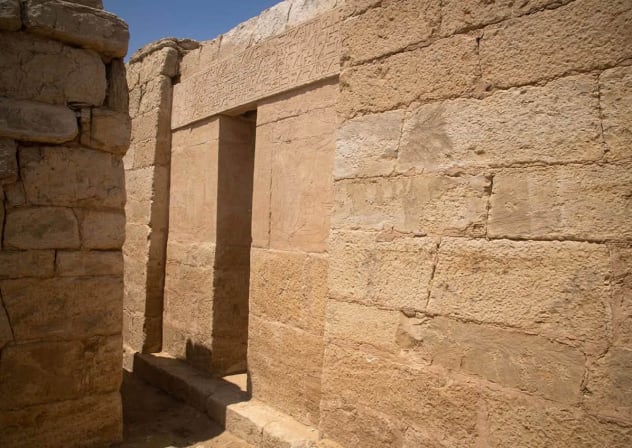
While the tomb itself had been previously known, discovered by French archaeologist Auguste Mariette in the nineteenth century, the chapels found within it were not.
France loans Mexico rare Aztec manuscript as nations celebrate 200 years of diplomatic ties

Rare Christian amulet holding bible scrap, ancient stone seal unearthed at Turkish site - report

How to move an ancient mikvah? Inside the IAA's operation to conserve a Second Temple ritual bath
Egypt uncovers first complete bath complex, ancient hydraulic system north of Suez Canal
Leithy added that the layer is marked by remnants of ancient Cypriot pottery and Greek amphorae, confirming that settlement of the site began before the construction of the bathing complex.

Nahariya's Byzantine church hit by Hezbollah rocket reopens to public after four months
At the time, the IAA had shared with The Jerusalem Post that only the site's modern, protective structure had been damaged in the strike.

Egypt unearths underground tombs, golden tongues ahead of construction in ancient coastal city
An unfinished statue of the Greek goddess Aphrodite, a limestone gravestone depicting a seated man holding a bird, as well as the remains of a plaster sphinx statue were also found at the site.

Second-century building found near Colosseum may have been ancient Rome's firefighter barracks
The mosaic's design closely resembles one previously discovered in a firefighters' barracks in Ostia, the ancient port of Rome, about 30 km from the capital, the archaeological office said

‘Zionist act of highest order’: Smotrich allocates NIS 113m. to develop West Bank heritage sites
The West Bank is home to over 2,600 archaeological and heritage sites, including the Cave of the Patriarchs in Hebron, the Qumran Caves in the Judean Desert, and Sebastia.

At sunrise in an ancient Golan synagogue, the debate over sovereignty feels absurd - opinion
Zionism, at its foundation, is the return of an indigenous people to the hills, springs, and sacred sites that shaped its civilization long before anyone called it a nation-state.

UNESCO adds 25 new World Heritage Sites including Mount Olympus, Normandy's D-Day beaches
The List of World Heritage Sites includes sites in three categories: cultural sites, natural sites, and mixed sites which combine the two.

Authorities seize thousands of stolen artifacts in raid on antiquities smuggler's home in West Bank
Trading in antiquities without a permit and searching for antiquities without a license using a metal detector are all criminal offenses under Israeli law.

First Temple-era figurine mold unearthed in Jerusalem's 'most significant excavation' in decades
Tower of David Museum Chief Curator Eilat Lieber said that "the discovery of the first mold for producing figurines dating to the First Temple period has generated tremendous excitement."

Ancient Cypriot silver coin found on Ashdod's shore offers new insight into 2,500-year-old trade
The approximately 2,500-year-old coin was located by Ashdod Beaches Department Deputy Director Avi Chaprak during a search to locate objects lost by visitors to the beach.
