Archaeology
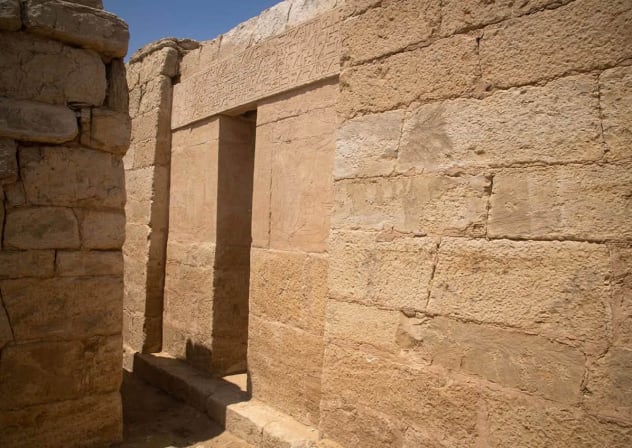
Archaeologists unearth tomb shared by ancient Egyptian judge and his scribe father
While the tomb itself had been previously known, discovered by French archaeologist Auguste Mariette in the nineteenth century, the chapels found within it were not.
France loans Mexico rare Aztec manuscript as nations celebrate 200 years of diplomatic ties

Rare Christian amulet holding bible scrap, ancient stone seal unearthed at Turkish site - report

How to move an ancient mikvah? Inside the IAA's operation to conserve a Second Temple ritual bath
Previously undiscovered ancient Egyptian tomb found at Theban necropolis on Nile's west bank
Inscriptions found within the tomb bear the name of its owner, “Paser,” as well as wall paintings depicted Paser worshipping the shrines of several deities.

France returns 23 artifacts to Syria after 15 year-long loan amid Macron’s historic Damascus visit
The artifacts were originally loaned in 2010 and 2011 to the Arab World Institute (IMA ) in Paris from museums in Damascus, Aleppo, Latakia, and Palmyra.

Researchers decode 200-year-old Red Sea navigational chart, revealing lost seafaring secrets
The document, dated to the late 18th or early 19th century, is illustrated with images of ships and religious buildings. It depicts more than 180 islands, along with reefs, landmarks and flags.

Byzantine gold artifacts help archaeologists uncover past of ship wrecked off Croatian coast
His team, equipped with diving gear, has spent the past decade slowly uncovering the history of the ship, whose wreckage lies near the Adriatic island of Mljet.

Oldest copy of Homer’s Odyssey in book form joins Christopher Nolan's film press tour
The Manchester Odyssey dates back to the third century BCE in Egypt, around the time scrolls went out of fashion and “bound” books became more popular.

‘Weaponization of cultural heritage’: Israel accuses PA of exploiting UNESCO in bid for Sebastia
The 450-acre site, which has awaited joining the world heritage list since 2012, has a history dating back at least 3,000 years.

Days before Tisha B'Av: Charred wooden beams from First Temple’s destruction unearthed in Jerusalem
The First Temple, built by the biblical King Solomon, was destroyed in 586 BCE at the hands of Nebuchadnezzar II, the second king of the Neo-Babylonian Empire.

Ancient humans precisely navigated northern Israel to find right stones for tools, study suggests
Basalt seemingly held special importance at GBY, particularly for producing large cutting tools like handaxes and cleavers.

Archaeologists discover rare 2,600-year-old stele of Assyrian king in Iraq's Nineveh
The stele has since been moved to the Inspectorate’s headquarters to undergo initial restoration work so that it can be studied in depth.

Inside the tragic, decades-long mystery of Qumran's lost Second Temple incense
The vast majority of material was lost after a 2025 murder. All that remains is a small amount of dust collected from the floor and a few samples preserved by the Jones family.
