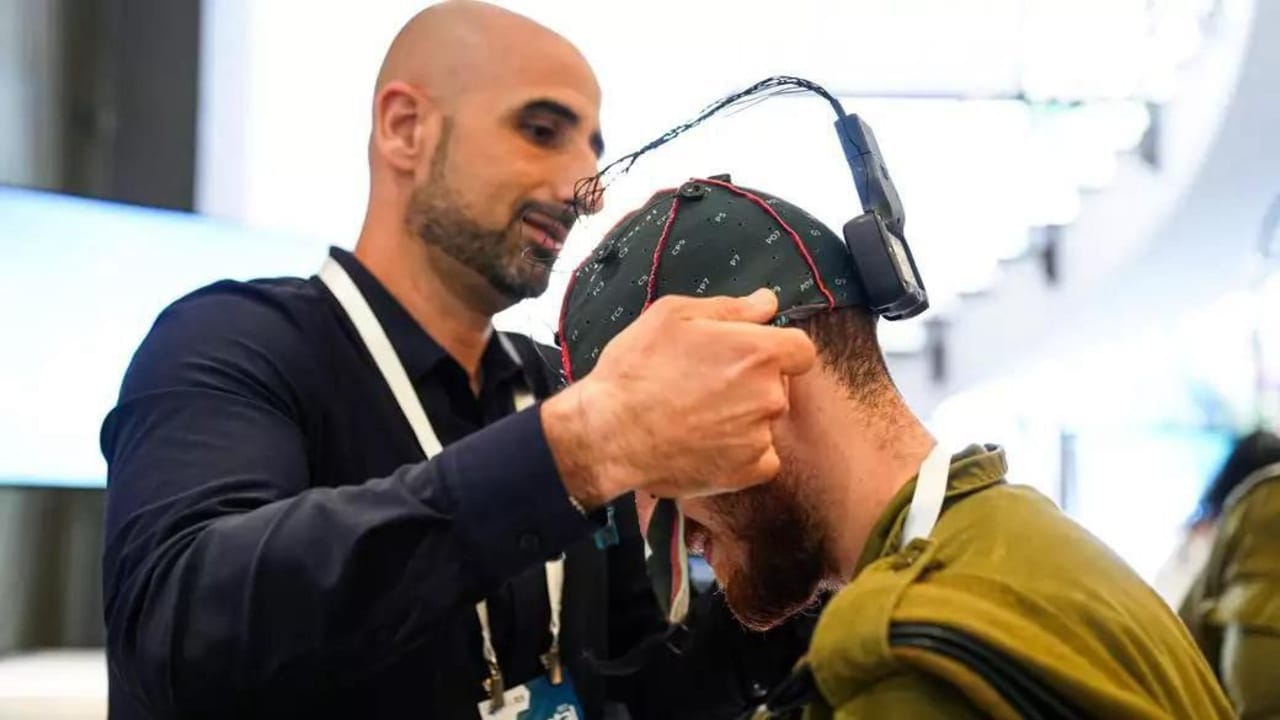
A new Israeli study suggests that a short course of noninvasive brain stimulation may significantly reduce intrusive traumatic memories in people suffering from post-traumatic stress disorder (PTSD), pointing to a potential new treatment approach.
The research, led by Prof. Nitzan Censor of Tel Aviv University, indicates that carefully timed magnetic stimulation of the brain can lead to marked reductions in flashbacks and intrusive thoughts, symptoms widely considered among the most persistent and difficult-to-treat aspects of PTSD.
PTSD is a mental health condition triggered by experiencing or witnessing a terrifying event. Symptoms include flashbacks, nightmares, severe anxiety, and uncontrollable thoughts. People with PTSD often avoid reminders of the trauma and may experience negative changes in beliefs and feelings. The condition is typically managed with therapy and medication.
Censor explained his findings to The Press Service of Israel.
“This is the first time that several methodologies came together to make such an experimental treatment possible: the ability to reach deep areas of the brain using magnetic stimulation, combined with the reactivation of memory, which allows a window for intervention,” Censor told TPS-IL.

The study focused on the hippocampus, a deep brain structure known to play a central role in the formation, storage, and retrieval of memory. Because direct stimulation of deep brain regions would require invasive procedures, the researchers employed an indirect strategy.
Scientists used MRI scans to identify surface brain regions connected to hippocampus
Using functional MRI scans, the team identified surface brain regions that are functionally connected to the hippocampus in each participant. These individualized targets were then stimulated using transcranial magnetic stimulation (TMS), a noninvasive technique already used in a range of neurological and psychiatric treatments.
Ten adults diagnosed with PTSD participated in the initial trial. Each underwent five weekly treatment sessions. In every session, the traumatic memory was first deliberately reactivated through exposure to an audio narration of the traumatic event, Censor said.
Only after this reactivation was brain stimulation applied, during a brief period when the memory is considered flexible and open to modification, a process known as memory reconsolidation. The aim was to influence how the memory is re-stored in the brain and reduce its emotional intensity.
The results, according to Censor, showed a consistent reduction in PTSD symptom severity across all participants, with the most significant improvements observed in the frequency and intensity of intrusive memories.
The findings carry particular relevance in Israel. In two years of war, more than 3,700 soldiers have been diagnosed with PTSD, while another 9,000 have applied for recognition. Among civilians, a Ben-Gurion University of the Negev study in March 2025 found that nearly half of young Israelis showed signs of war-related PTSD due to their high rate of military service, personal losses, and displacement from their homes.
“This study is preliminary, based on a small group and without a control group. But it is a clear proof of concept. We are currently working on a much larger clinical experiment,” Censor said. “I hope that people suffering from PTSD in Israel after two years of war may benefit from it in the future.”
The findings were published in the peer-reviewed scientific journal Brain Stimulation.