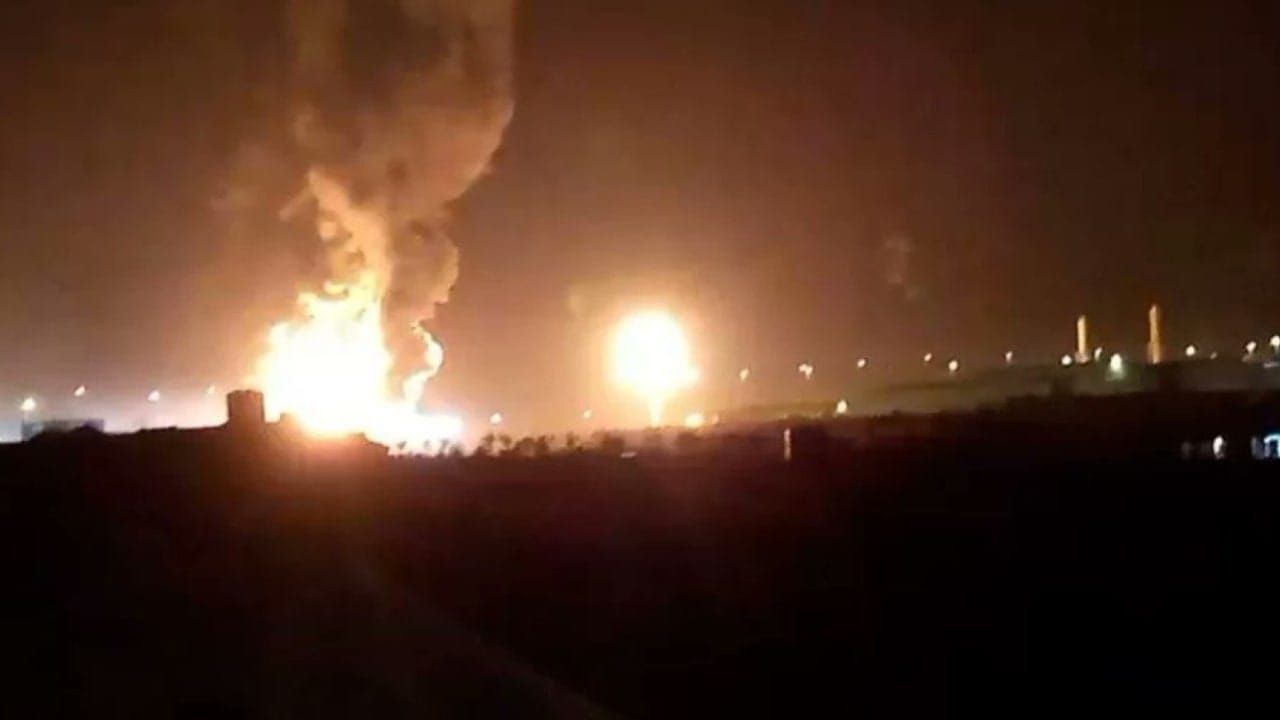
The Khor Mor gas field is expected to restart operating days after a drone attack damaged it. The facility is an important part of the energy grid that provides electricity for the autonomous Kurdistan Region in northern Iraq.
Leaders in the region, as well as the US, UN, and others, have condemned the attack. The gas field has been targeted at least a dozen times in the past, usually by kamikaze drones. Iranian-backed militias are alleged to be behind the attacks.
“Iraq’s Kurdistan Region has agreed with the company operating the Khor Mor gas field to restart production within hours to restore electricity, Iraqi Kurdish Prime Minister Masrour Barzani said on Saturday, days after the field was hit in an attack,” Saudi-based newspaper Arab News reported.
However, Rudaw Media Network, a news channel in the Kurdistan Region, reported: “Shipments of remaining liquefied petroleum gas (LPG) stored inside the Khor Mor gas field began moving to cities across the Kurdistan Region on Saturday, as maintenance teams continue repairs following a drone attack that halted production three days earlier.”
The LPG tanks were being emptied, but the plant had “not yet resumed operations,” the report said. “Eight tankers departed the facility on Saturday carrying full loads of LPG to various destinations across the Kurdistan Region.”

The gas field, which was attacked on Thursday, is one of the largest in the region. It appears to have been a rocket attack.
US officials meet with Kurdish counterparts
The attack led “to production shutdown and extensive power cuts,” Arab News reported. “There was no immediate claim of responsibility, and authorities have not said who was behind the attack.”
Kurdistan Region Prime Minister Masrour Barzani said: “I have urged [Iraqi] Prime Minister Mohammed Shia Al-Sudani to hold the perpetrators of this attack accountable to the full extent of the law, whoever they may be and wherever they are.”
The attack comes as Iraqi politicians jockey for control of the country after elections in early November. Several candidates have recently bowed out of the race to become prime minister.
The pro-Iranian Shi’ite parties usually control the Prime Minister’s Office of Iraq, while Kurds have been the president of Iraq since 2005, and Sunnis hold the speaker of Parliament role.
The Kurdistan Region is autonomous and a key partner of the US and US-led Coalition against ISIS. Its Peshmerga, the Kurdish armed forces, helped defeat ISIS.
The area is also a center of security and economic success in Iraq. It requires energy supplies to keep that success moving forward. The Iranian-backed militias have targeted the region in the past.
“The world views Iraq as a country capable of playing a larger and more influential role in the region, provided that the issue of weapons outside state control is fully resolved and the prestige of official institutions is protected,” US Envoy to Iraq Mark Savaya wrote on social media over the weekend.
“No economy can grow, and no international partnership can succeed, in an environment where politics is intertwined with unofficial power,” he added. “Iraq now has a historic opportunity to close this chapter and reinforce its image as a state built on the rule of law, not the power of weapons.”
Regarding the importance of separation of powers, Savaya wrote: “Iraq stands at a critical crossroads. It can move toward independent institutions capable of enforcing the law and attracting investment, or fall back into the cycle of complexity that has burdened everyone.”