
Last week, I took my entire congressional staff to the United States Holocaust Memorial Museum. It was not a ceremonial stop or a symbolic outing: It was a deliberate act of education and responsibility. Everyone who serves in government should understand how quickly a society can unravel when hatred is normalized, truth is distorted, and silence replaces courage.
The Holocaust did not begin with gas chambers – it began with words. It began with propaganda, scapegoating, and the slow conditioning of a people to see their Jewish neighbors as “other.” It began when lies were repeated often enough to sound reasonable. It began when institutions failed to push back, and when good people told themselves the danger was exaggerated or temporary.
Those are the lessons I wanted my team to see, face to face.
Walking through the museum, you see how antisemitism was industrialized. You see how a modern, educated nation was persuaded that Jews were responsible for economic hardship, cultural decline, and national humiliation.
How government agencies, media outlets, universities, and civic institutions were captured and repurposed to advance a poisonous ideology. You see what happens when a society convinces itself that hatred is justice and cruelty is compassion.
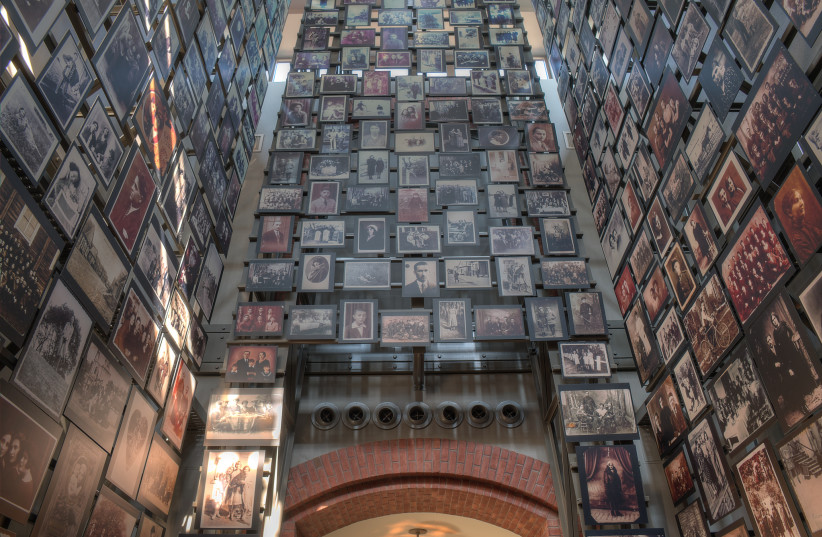
The most haunting truth is that the early warning signs were visible. They were debated. They were rationalized.
They were dismissed. By the time the world fully grasped what was happening, it was too late.
Antisemitism is rising across the West
Across America and the West, antisemitism is rising in ways many believed belonged to another century. Jewish students are harassed on college campuses. Synagogues require armed security. Jewish Americans are targeted online, in public spaces, and in their workplaces. Ancient stereotypes are repackaged in modern language.
We hear language today that should unsettle every American. Jews are accused of controlling governments, media, and finance. They are blamed collectively for the actions of a foreign state. They are told they do not belong in spaces meant to be open to all. These are not new ideas; they are old lies with fresh branding.
The Holocaust teaches us that antisemitism never remains confined to Jews, but corrodes everything it touches.
Once a society accepts that one group can be demonized, stripped of dignity, and excluded from protection, no group is ultimately safe. Hatred is never satisfied with a single target. This is not only a Jewish issue; it is an American issue.
As a Member of Congress, I have a responsibility not only to legislate, but to lead. Leadership means ensuring that the staff in my office understands what is at stake. It means preparing my team to recognize early warning signs. It means making clear that indifference is not an option.
The Holocaust Memorial Museum is not simply a memorial to the past: It is a warning to the present. It reminds us that evil does not arrive announcing itself, but arrives disguised as grievance, activism, and moral certainty. It spreads when decent people convince themselves it is someone else’s problem.
Taking my staff to the museum was a small act, but a necessary one. Every generation must be taught that “never again” is not a slogan; it is a commitment that must be renewed through vigilance, courage, and action.
The lessons of history are clear. When identity politics prevail, democracy weakens. When good people stay silent, evil advances.
We will not be silent. We will not forget. And we will not allow hatred to define the future of our great country.
The author is a congressmember representing Arizona’s 8th Congressional District.