
How many times have you stood in a grocery store staring at an empty milk shelf? This shortage is not the result of “pre-chag demand,” but of an especially outdated system in which Israel’s Minister of Agriculture sets annual milk production quotas by decree.
Yes – like in a communist state.
The result is that dairy farms do not produce according to capacity or consumer demand, but according to a fixed quota that limits supply, keeps prices artificially high, and leaves the entire sector chronically short of supply. What emerges is a frozen, inflexible market, unable to expand or become more efficient – in which everyone pays a price, including the farmers themselves, not just the public.
A market based on production quotas, the destruction of surplus milk, and the blocking of a younger generation of farmers from entering the industry is not a market that “protects Israeli agriculture,” as the current campaign manipulatively claims.
It is a market that inflicts serious harm on agriculture in order to serve a small, wealthy interest group that alone enjoys the cream.
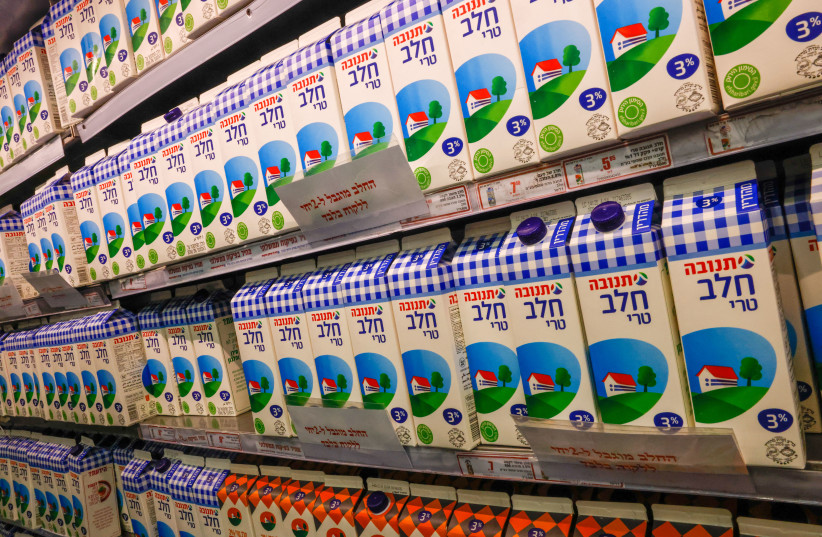
Israel clings on to old, outdated system
Countries such as New Zealand, the Netherlands, and Canada opened their markets, eliminated quotas, enabled efficiency, and became global dairy powerhouses. Israel clung to an antiquated mechanism that primarily serves large dairies and the milk cartel. Farmers lose, consumers lose – and they get richer. The clearest evidence is that dairy prices in Israel are tens of percent higher than the OECD average.
The reform being advanced by Finance Minister Bezalel Smotrich through the Knesset Committee aims to strengthen and develop Israel’s dairy sector and finally allow Israeli agriculture to realize its vast potential.
Eliminating quotas will enable each dairy farm to produce according to its real capacity, not bureaucratic decisions. The market will grow, farms will be able to invest, expand, and become more efficient – and for the first time, export – just as leading countries around the world already do.
It is important to emphasize: the state is not abandoning dairy farmers. Those who choose to leave the sector will be supported by a broad safety net, including a substantial quota buyout program. Alongside this, the state will provide significant support to small and mid-sized dairies to help them streamline operations, improve quality, invest in infrastructure upgrades, and benefit from planning relief. In practice, the reform is aimed at strengthening farms, not shutting them down. The dairy market will become larger, more competitive, and more prosperous.
Claims about “food security” are also the exact opposite of the truth. The current system – where all production is concentrated domestically without diversification – actually creates greater risk. A disease outbreak among herds or a disruption in feed supply could cause a severe shortage with no real solution. Combining strong, advanced, and efficient domestic production with controlled imports ensures stability, disperses risk, and prevents shortages. That is how advanced countries operate – and how Israel should operate as well.
Those who stand to lose from the reform are not dairy farmers, and certainly not consumers, but a small interest group that has grown accustomed to a closed, non-competitive market and is now running an aggressive public campaign to preserve it.
Israeli agriculture, by contrast, stands to gain a freer, more efficient, and more profitable market.
Farmers will be able to grow and expand, consumers will benefit from lower prices and greater choice, and the Israeli economy will gain a modern, flexible, and advanced dairy sector – one that can finally compete, lead, and even export to other countries. With God’s help, the reform will pass and bring real and meaningful change to Israel’s agriculture, economy, and entire public.
The writer is Chairman of the Knesset Public Enterprises Committee