Archaeology
Frescos of a peacock, fruit discovered in Roman villa near Pomepii belonging to Emperor Nero's wife
The discovery's announcement follow the site’s partial opening to the public for the first time.

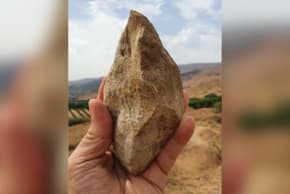
New dating of Jordan Valley site rewrites timeline of human migration from Africa - study

A Jerusalem gem: Rediscovering the Rockefeller Museum’s treasures in Israel's capital
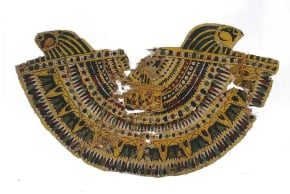
Suspect charged for stealing Egyptian artifacts from Australia museum, citing church ties - report
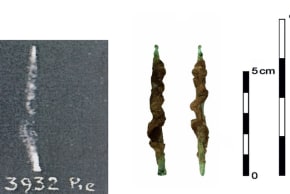
Newly identified ancient Egyptian copper drill rewrites history of region’s craftsmanship
The drill’s chemical composition was also surprising, study co-author Jiří Kmošek noted, as it is made up of an unusual copper alloy containing arsenic, nickel, lead, and silver.
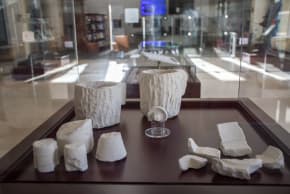
Bronze scale pan found in ancient Sussiya reveals how biblical law shaped daily Jewish life
Neta, a second-grader at the regional school in Sussiya, and her father, Nachshon, discovered the pan inside a residential building near the town’s main street.

Egyptian researchers discover collection of ancient rock art spanning 10,000 years in Sinai desert
The engravings and drawings are divided into several groups, researchers learned in their initial study of the space, the oldest of which are done in red and dated to between 10,000 and 5,500 BCE.

Portugal returns stolen Mayan, Zapotec artifacts to Mexico in first-ever archaeological restitution
INAH specialists were sent photographs of the finds and conducted a preliminary review of the three, confirming that they indeed “form part of Mexico’s archaeological heritage.”

Second Temple workshop found on Israel's Mount Scopus during investigation into antiquities thieves
The workshop was discovered at the Ras Tamim archaeological site on the eastern slope of Mount Scopus.
On This Day: Howard Carter enters King Tut's burial chamber in Egypt's Valley of Kings
Additional treasures found within the burial chamber are housed in the Egyptian Museum in Cairo.

Cambridge students find burial pit, 9th century ‘giant’ who underwent surgery during training dig
The pit is believed to have been from a time of conflict “between the Saxon-run kingdom of Mercia and the kingdom of East Anglia, which was conquered by the Vikings in around 870 [CE]."

Zapotec tomb from 600 CE marks Mexico’s most ‘significant archaeological discovery’ in last decade
The Zapotecs were a major pre-Hispanic civilization that flourished in Oaxaca from circa 700-500 BC until the Spanish conquest.

German archaeologists discover medieval tunnel system inside Neolithic burial site
Thousands of similar tunnel systems have been discovered across Europe and despite this, their purpose has been subject to decades of theory and debate.

'Nothing quite like it': UK Treasure Act names Roman carriage ornament Essex's first 'treasure'
According to the Act, archaeological finds can be given the status of Treasure if they are deemed to be of historical, archaeological, or cultural importance.
