Cartoon
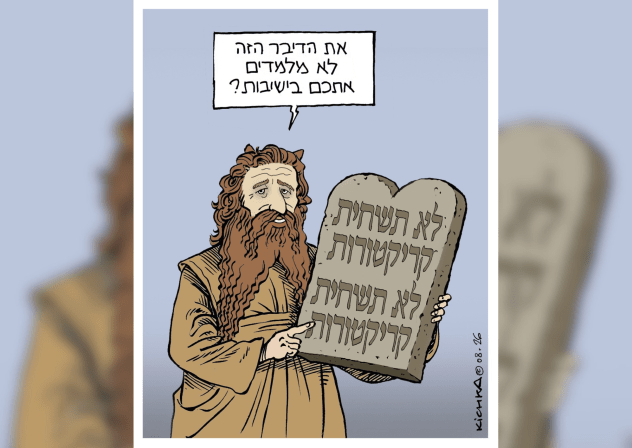
Exhibition of ultra-Orthodox military draft cartoons vandalized ahead of Animix Festival
A young man wearing a kippah confronted organizers and Tel Aviv Cinematheque CEO Tomer Cohen. They said he tore down and damaged parts of the exhibition before attempting to flee.

Tel Aviv's Animix festival combines political satire, cartoons with tributes, memorials, lectures

Ink and irony: A closer look at the cartoonist who chronicled Israel’s formative years

This Jewish artist fought Nazis with a paintbrush, when art like his still mattered
Here’s what Jewish New Yorker cartoonist Roz Chast’s dreams are made of
A pioneer of graphic storytelling, Chast reflects on what inspires her and what the genre brings to the art world.

Animix festival in Tel Aviv presents ‘The Island,’ ‘Batman,’ Disney princesses
The animation, comics, and caricature festival is to include a cartoonist discussion of Israel's ongoing mass protests.

The Guardian apologizes for running antisemitic cartoon of ex-BBC chairman
Former BBC chairman Richard Sharp resigned after it was revealed he failed to declare that he had helped Boris Johnson secure a large loan.

'100 Cartoons': Drawings that summarize Israeli, Zionist history - review
100 Cartoons was not a history book told in comic strip form, but an academic study of the history of Zionism and the modern State of Israel, using cartoons to illustrate the issues of the times.

The fuzzy, neurotic, unmistakably Jewish legacy of cartoonist Ed Koren
Koren was once described as the “poet laureate” of the Upper West Side of Manhattan.

Grapevine March 1, 2023: Between Jerusalem and Rome
Movers and shakers in Israeli society.

'Dilbert' comics pulled from US newspapers after creator's racist comment
The creator of the American comic strip “Dilbert” made racist comments on his YouTube channel. Now, his comic is being dumped by newspapers all over the US.

Int'l Winnie the Pooh Day: How do stuffed toys aid early development?
Winnie the Pooh Day is celebrated every year on January 18, the birthday of the British author A.A. Milne (1882-1956), who wrote the book.

Only 5% of readers can find the candle in this picture – can you?
Most participants said that it took them over a minute to find the hidden candle, while others claimed that it was not in the picture at all.

Happy 50th anniversary of the Dry Bones cartoons
The Dry Bones cartoonist, who has been called a “national treasure of the Jewish people,” has received many awards, such as the Nefesh B’Nefesh Bonei Zion Award and The Golden Pencil Award.
