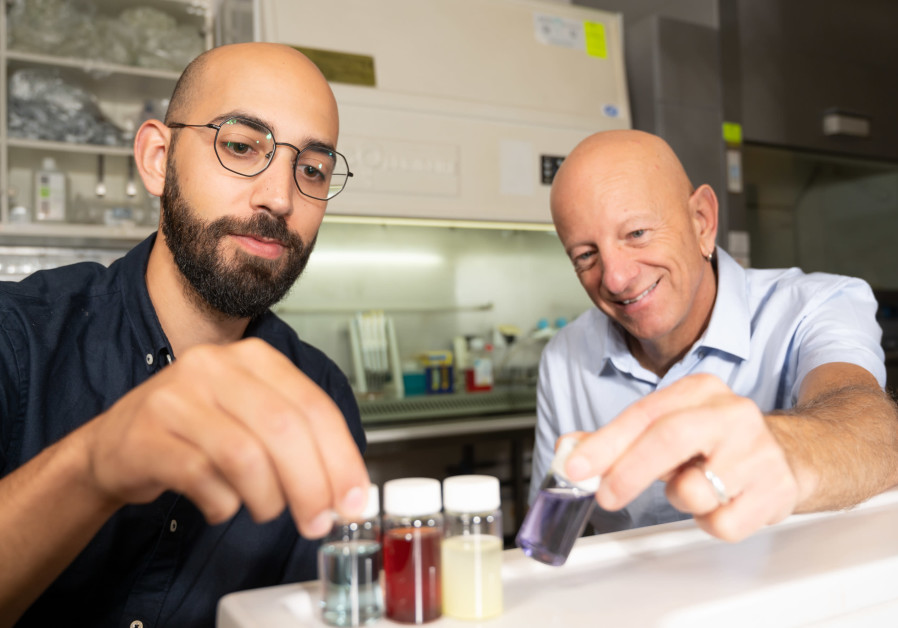
Researchers at Ben-Gurion University of the Negev in Beersheba have developed a new type of artificial nose which is capable of sensing and differentiating between different types of bacteria, viruses and poisonous gases using their "smell print."
The development is based on the absorption of gases using carbon nanoparticles, and the electrical reaction caused by the particles as a result of the absorption.
"In particular, we have found that the system is extremely sensitive to volatile substances which are secreted by bacteria during their reproduction," the researchers said in a statement.
"In addition, we were able to “train” the electronic nose using machine learning techniques to detect different gas molecules, individually or in a mixture, with high accuracy," the researchers added.
"The technology is cheap and simple and can be applied for various uses," says Prof. Raz Yelink, vice president and dean of research and development at BGU and leader of the research.
"The sensor will also be able to detect bacterial infections within a short time frame, capable of, for example, performing a "throat swab" test within an hour, compared to the 24 hours and more required for such tests today," Yelink said.
"Another possible use would be to warn of the presence of bacteria in food products," he added.