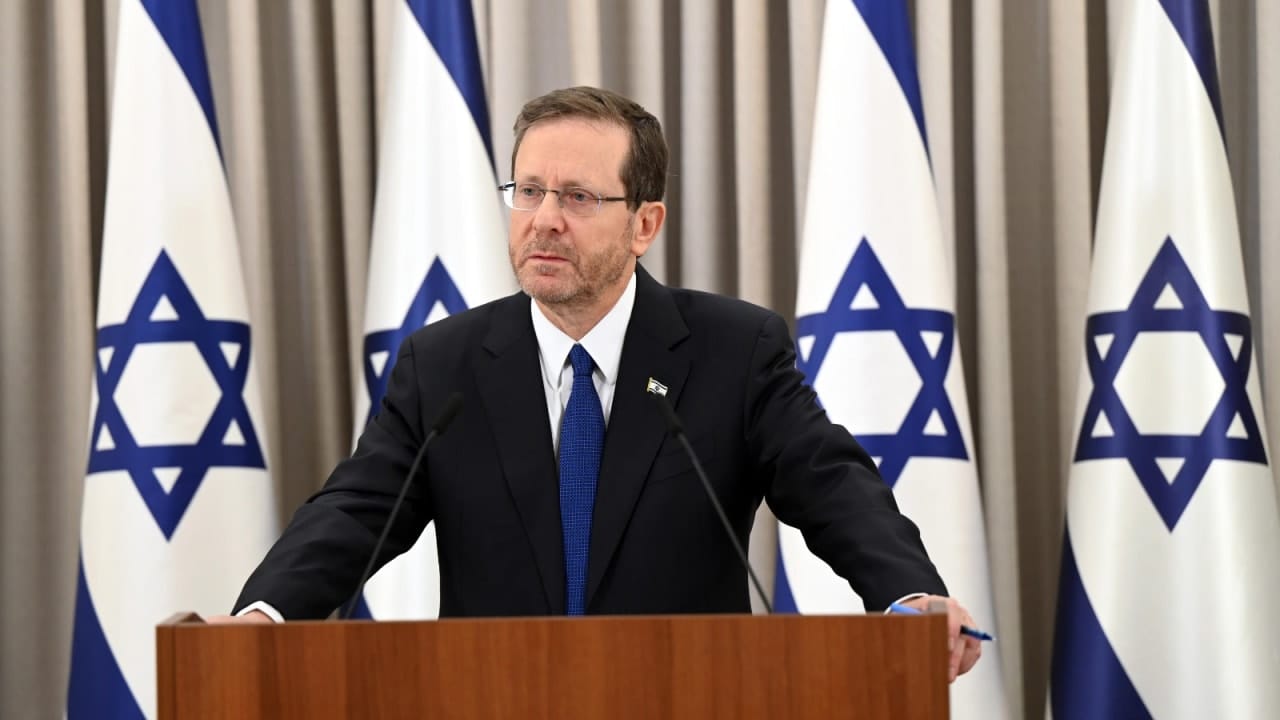
Compromise over the government's controversial reforms of Israel's judicial system can be reached within days if the sides are willing to negotiate, President Isaac Herzog said during a presidential Bible study group session launched by the 929 initiative.
"During the past week I dedicated myself to meetings and contact with all of the sides of the map and influential bodies in the dispute that stands before us, incleading leaders in the coalition and opposition, in order to do everything and arrive at dialogue and consensus."
Isaac Herzog
"During the past week I dedicated myself to meetings and contact with all of the sides of the map and influential bodies in the dispute that stands before us, including leaders in the coalition and opposition, in order to do everything and arrive at dialogue and consensus," the president said.
"From all of the talks it arose that on the basis of principles I proposed last week, agreements can be reached in a relatively short time, even a few days. Not years or even months," the president said.
"I determine unequivocally from my experience and role: We can arrive at an agreement," Herzog concluded.
A last-minute chance for dialogue before judicial reforms head to the Knesset
The comments appeared to be a last-minute attempt to arrive at some kind of basis for dialogue before the judicial reform takes a significant step forward on Monday – passing the reform's first two provisions in their first reading in the Knesset plenum, to give the government control over judicial appointments and to block the High Court of Justice from ruling on basic laws.

Herzog's comments came after Knesset Constitution, Law and Justice Committee chairman MK Simcha Rothman, one of the reform's chief engineers, reportedly met with the president and a number of experts on Israel's judicial system earlier on Sunday afternoon.
Herzog last Sunday called on the government to freeze the legislative process before the first reading in order to begin dialogue. He also laid out a five-point plan that included formulating a Basic Law: Legislation that would codify the special status and legislative process of basic laws; formulating a plan to deal with the courts' overburdening, which leads to delays of justice; acting to return trust in the judicial system; reforming the makeup of the judicial appointments committee, but not in a way that gives the government an immediate majority; and define the "reasonableness clause" by negotiation such that it is not canceled completely but also restrains the courts from using it unnecessarily.